Treat relocation as an asset transaction, not a truck booking
A modular camp that has served one project may have another use after the original contract ends. The next step could be a move to a new site, a sale to another operator, a transfer within the same owner’s portfolio, or partial reuse of selected modules. These are different transactions.
Start by defining the intended outcome before asking for a transport quotation. Identify which buildings are moving, which will remain, whether the receiving site is known, who will own the units during transit, and whether the new use is the same as the old one. A camp designed around shift accommodation may contain offices, dining rooms, washrooms, laundry, stores and utility modules.
The transaction should have separate workstreams for asset condition, technical disconnection, logistics, destination preparation, commercial transfer and site closeout. A carrier can move a load; it cannot decide whether a module is suitable for its next use. Likewise, a bill of sale does not establish that the receiving land, foundations or utility systems are ready.
Establish the identity and current configuration of every unit
Before dismantling begins, build an asset register that connects each physical module to its records. Use a durable identifier on the unit and repeat it on drawings, photographs, packing lists, maintenance files and the proposed receiving-site plan. If the operator has assigned room numbers, retain those as a second reference rather than replacing the factory or asset identifier.
Record the current configuration, not simply the original purchase description. Note dimensions, module type, openings, internal partitions, external stairs or decks, installed equipment, service entry points, visible alterations and any components that were added after commissioning. Record the drawing revision that matches the installed condition.
The register should also state ownership, location, operating status, last known use, maintenance history available to the seller, known defects, open claims and any restrictions on transfer. Separate facts supported by documents from operator recollection. A missing maintenance record is not proof that maintenance was not performed, but it is a limitation the next buyer needs to see.
Plan the shutdown and disconnection sequence
Disconnection should be planned around the actual services and the site’s operating obligations. Prepare a unit-by-unit schedule covering electrical feeds, water supply, wastewater, data, fuel where present, ventilation interfaces, fire-alarm connections and any external equipment. The list will differ between a sleeping module, kitchen, clinic room, office or washroom.
The destination-side project team should appoint qualified local trades to isolate and disconnect services under the applicable rules. Identify the point at which each supply is made safe, who controls lockout or isolation records, how residual water or other contents are handled, and how exposed pipework and cables are capped or protected. If a system serves several modules, the team must establish whether it can be isolated without affecting units that remain occupied.
Sequence the shutdown so that records are captured before equipment is removed or access panels are closed. Label both ends of reusable cables, pipes and connectors where appropriate, and record items that will not travel with the building. Keep live services out of the lifting and transport plan.
Protect finishes, openings and service interfaces
A module can arrive structurally intact yet require avoidable work because doors, windows, cladding edges or service openings were left exposed. Prepare a protection schedule based on the actual route, handling method, climate exposure and storage period. It should identify which components are removed, which remain fixed, which are secured in place and which need separate packing.
Close and protect openings using methods compatible with the assembly. Temporary covers should shed water and resist the expected handling environment without trapping moisture against vulnerable finishes. Protect corners, glazing, projecting trim and roof edges from contact with lifting gear or adjacent cargo.
Protection is not a substitute for a condition record. Photograph each relevant area before wrapping, record existing scratches or damage, and note any component that cannot be protected without a design decision. Agree who may remove protection at arrival and what checks must occur first.
Verify lifting points and the load-transfer method
Relocation changes how a building is supported. The lifting arrangement used during original placement may not be suitable for a later move, particularly if the unit has been modified, if lifting points are concealed, or if the current condition is uncertain. The project engineer and lifting contractor should review the module’s actual configuration, available drawings, mass information, centre-of-gravity assumptions and approved lifting details before selecting equipment or rigging.
Do not infer lifting capacity from the appearance of a corner fitting or from the fact that a module was moved previously. Check whether lifting points are designed for the proposed direction and whether temporary bracing or spreader arrangements are required. Confirm that roof-mounted equipment, attached stairs, decks or later additions do not alter clearances or load paths.
The lifting contractor should prepare the lift plan, equipment selection, exclusion zone, communications, ground-bearing review and weather controls under the applicable local requirements. Inspect slings, shackles and connection hardware, and keep personnel clear of suspended loads. OSHA’s crane guidance is specific to its regulatory setting, but it illustrates why rigging, load control and competent planning are not casual site tasks.
Review the route, carrier and transport protection
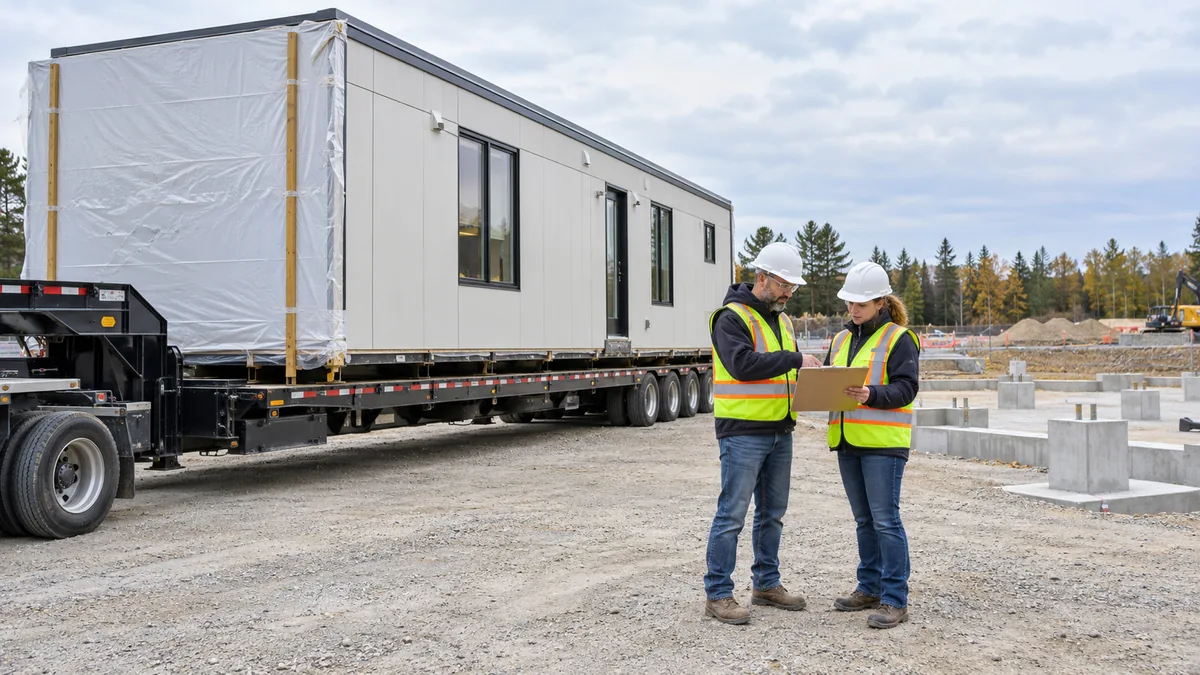
A transport plan begins with the unit in its actual travel configuration. Confirm overall dimensions, weight information available for the specific unit, projections, support arrangement, loading orientation and whether accessories travel separately. The carrier needs these details to assess vehicle selection, route constraints, permits where applicable, escort requirements, bridge or overhead clearances, turning space and loading access.
Ask the carrier to review the route using the proposed vehicle and the real pickup and receiving locations. A route that works for a standard freight trailer may not work for a long, wide or tall module. Check local roads, gate openings, gradients, temporary obstructions, site turning areas and the space needed to position unloading equipment.
The transport protection plan should address restraint points, bearing surfaces, weather exposure, vibration-sensitive components, loose parts and inspection access. The carrier is responsible for its transport operation under the contract and applicable rules; the seller should provide accurate product information and agreed handling instructions. In the United States, FMCSA cargo-securement rules apply to covered commercial motor vehicles in interstate commerce, but their applicability and detailed requirements must be assessed for the actual shipment.
Record arrival condition and maintain chain of custody
At the receiving site, identify the module before unloading and compare its physical identifier with the dispatch record. Record arrival date and time, vehicle or shipment reference, seal or package condition where relevant, visible impact marks, water exposure, displaced protection and any missing loose components. Take wide photographs that locate the unit and close photographs that show each finding.
Separate damage reported during transit from damage first observed after unloading. If the condition may affect safe lifting, structural integrity, weather protection or later installation, stop the affected activity and refer it to the designated technical reviewer. Do not let a delivery signature imply acceptance of concealed or inaccessible areas.
Temporary storage is a separate custody stage. Name the party responsible for drainage, support, weather cover, security, access control and periodic checks while the module waits for foundations or installation. If the unit is moved again, update its location and condition history.
Prepare the receiving site before reconnection
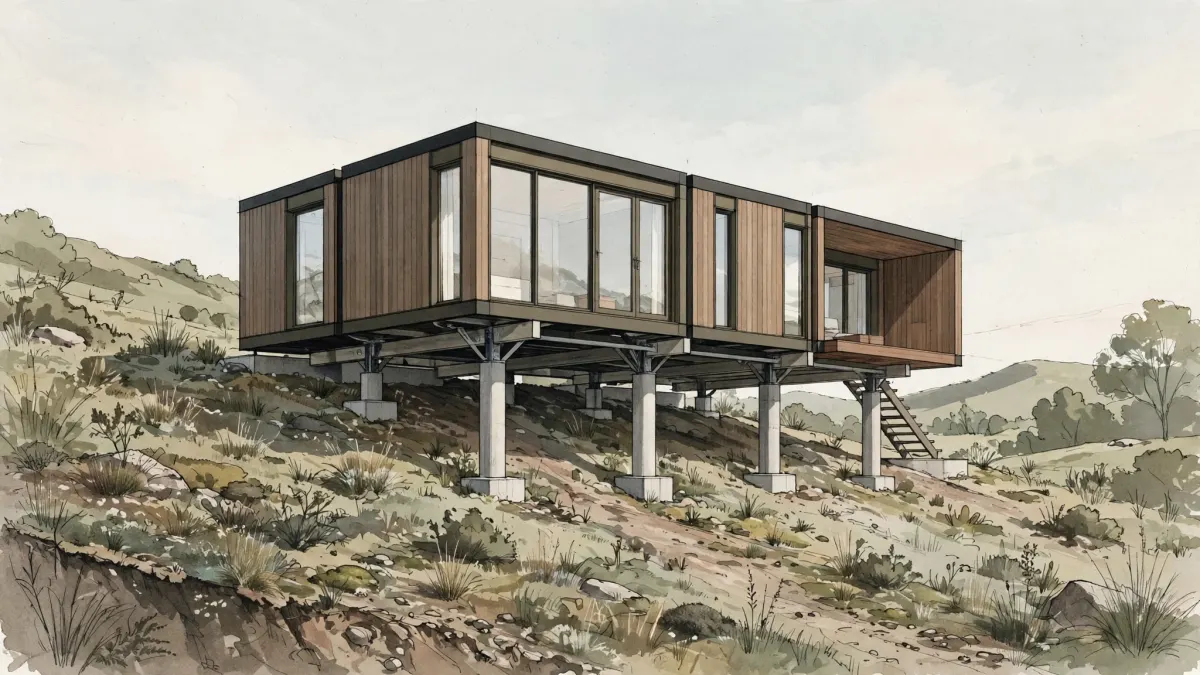
The new site must be assessed for the proposed building use, not simply for the ability to unload a truck. The local design team should confirm the ground information, foundation approach, support locations, anchoring design, drainage, finished levels, access routes, fire and separation considerations, and the relationship between modules. Existing pads or skids should not be reused merely because their dimensions appear compatible.
Compare the receiving layout with the module register and approved drawings. Check orientation, door swings, window positions, service entries, maintenance clearances, pedestrian routes and the sequence in which units will be placed. A camp that worked as a compact cluster may be unsuitable if the new plot requires wider circulation, different fire access or a changed separation between functions.
Foundations, anchoring, local installation, utilities, permits, inspections and final approval are destination-side responsibilities. The manufacturer can provide product drawings and interface information for review, but it does not replace the local engineer, installer, utility provider or authority. Agree the receiving-site hold points before transport: the team should know what must be complete, inspected or documented before a module is lifted onto its final supports.
Reconnect utilities and recommission the building
Reconnection should follow approved destination drawings and the scope of the new project. Map each module’s service interfaces to the site distribution system, including electrical supply, water, wastewater, communications, ventilation, fuel or specialist systems where applicable. Confirm that capacities, connection types, protection devices and operating assumptions are suitable for the new arrangement.
Use qualified local contractors to complete foundations and anchoring, field joints, service connections, testing and required inspections. The commissioning plan should state which checks apply to each system, who performs them, what evidence is retained, and which defects prevent operation. Keep factory records, transport observations and destination test records separate so the source and timing of each decision remain clear.
Before handover, confirm that operators can isolate services, access maintenance points, understand alarms and report faults. Provide manuals and spare-part information only for the equipment actually supplied and retained. If the module’s intended use changes, the review must address the new occupancy and service demand rather than assuming that its previous commissioning remains valid.
Understand the factors that influence resale value
There is no reliable universal resale percentage for a modular camp. A buyer’s view of value depends on the particular units, their condition, the records available, the destination, the intended use and the work required to make the assets useful again. Asking prices, book values and completed transaction values are different measures.
Relevant factors include the age and configuration of each module; the condition of the frame, roof, envelope, floors and openings; evidence of water ingress or corrosion; the state of electrical and plumbing components; the availability of replacement parts; and whether the layout can serve a new operator’s requirements. Transportability, lifting information, modular connection details and the ability to separate units can affect practical reuse. Documentation also matters: identifiable drawings, maintenance records, equipment schedules and clear ownership records reduce uncertainty during technical review.
Market fit is equally specific. A sleeping block may have limited appeal where buyers need classrooms or offices; a dining module may be useful only if its kitchen arrangement and service interfaces suit the next site. Location, import rules, local building requirements and the availability of qualified installers influence the buyer’s assessment.
Give a second-life buyer a structured due-diligence pack
A second-life buyer should inspect the asset as a building and as a bundle of transferable components. Begin with proof of ownership, serial or asset identifiers, the unit schedule, original scope, current configuration drawings and a list of later modifications. Confirm that the seller has authority to transfer the units and identify any leases, liens, insurance claims, warranties or contractual restrictions that may affect the sale.
The technical review should cover accessible structural areas, roof and wall condition, floor condition, doors and windows, corrosion, moisture indicators, service penetrations, visible wiring and plumbing, installed equipment and any damage from previous lifting or movement. A qualified inspector or engineer should determine whether further opening-up, testing or calculations are needed. The buyer should not rely on catalogue photographs, a video walk-through or a statement that the camp was previously occupied as proof of present suitability.
Match the intended new use to the actual layout and local requirements. Ask who will design foundations and anchoring, install the modules, connect utilities, obtain permits, arrange inspections and secure final approval. Clarify whether the seller includes dismantling, loading, packing, transport coordination, loose parts, manuals or post-sale support.
Close the old site and document the asset’s next chapter
Relocation does not end when the last module leaves the plot. The original operator may still need to remove temporary supports, buried service runs, tanks, cable routes, waste stores, temporary roads, fencing and other project infrastructure. The site owner and local project professionals should define the restoration scope against the lease, contract, environmental conditions and applicable local requirements.
Create a decommissioning record showing which modules and components were removed, what remains in place, which services were isolated or abandoned, how waste and reusable materials were handled, and which inspections or owner sign-offs are required. Record the condition of the land and any areas where excavation, staining, settlement or damage needs review. If the original camp used shared utility infrastructure, identify who retains responsibility for those systems after the buildings are gone.
For the transferred assets, close the seller’s register only after ownership, location and custody have been updated. Give the buyer the agreed drawings, maintenance history, equipment records, photographs, disconnection notes, transport documents and known-issue register. Retain a copy of the signed transfer and identify records that were unavailable.
Sources
Sources reviewed on November 13, 2026. These references provide regulatory or technical context; they do not approve a particular module, route, lift, site or resale transaction.
- Federal Motor Carrier Safety Administration, “Cargo Securement Rules”: https://www.fmcsa.dot.gov/regulations/cargo-securement/cargo-securement-rules. U.S. interstate commercial motor-vehicle context for preventing cargo shift and loss; applicability must be checked for the actual movement.
- U.S. Occupational Safety and Health Administration, “Steel Erection: Cranes”: https://www.osha.gov/etools/steel-erection/cranes. U.S. construction lifting and rigging context; not a substitute for a project-specific lift plan or local requirements.
- MK Mobile House, “Before a Modular Building Ships: Route, Lifting and Site-Readiness Checks”: https://mkmobilehouse.com/blog/modular-building-delivery-route-lift-site-readiness/. Related planning context for route review, lifting responsibilities and receiving-site readiness.
- MK Mobile House, “The 10-Year Cost of a Modular Cabin: Maintenance, Refurbishment, and Replacement Parts”: https://mkmobilehouse.com/blog/ten-year-cost-modular-cabin-maintenance-refurbishment/. Related lifecycle context; this article addresses asset transfer and relocation rather than refurbishment economics.
- MK Mobile House, “Foundations and Anchoring for Modular Cabins: Piers, Slabs and Skids”: https://mkmobilehouse.com/blog/foundations-anchoring-modular-cabins-piers-slabs-skids/. Related destination-side foundation and support context.
The asset-register fields, relocation sequence, resale due-diligence prompts and closeout structure are original editorial planning guidance. They are not a valuation method, engineering specification, transport permit or legal opinion.