Treat year one as a learning cycle
The first year after handover is a chance to learn how the cabin behaves in its actual location, how occupants use it, and which maintenance tasks are straightforward or difficult. The objective is not to impose one universal service interval. Establish a baseline, notice changes, and adapt routines to the site, climate, occupancy, and installed equipment. Start with the handover scope: what was supplied, what was installed locally, which items remain open, and which manuals or warranty documents apply. Factory-fitted components may still depend on destination-side foundations, anchors, utility connections, drainage, and installation work. Confirm who owns each task, including local permits, inspections, commissioning, and final approval. These are destination-specific responsibilities for the owner and qualified local professionals. During the first months, test routines rather than making undocumented changes. Repeated questions from cleaners, occupants, and technicians can reveal access or operating problems worth correcting.
Record the starting condition
Before routine occupancy, create a dated record of visible condition. Photograph each elevation, accessible roof areas where safe, doors, windows, floors, wet areas, cabinets, equipment labels, and service panels. Use wide views for context and close-ups for existing marks. Repeat photo positions later where practical. Separate visible condition from acceptance status: a photo documents what was seen but cannot prove a hidden assembly is sound or that a system complies with local requirements. List incomplete work, damage, loose hardware, missing labels, and documents still owed. Assign an owner and next action to each item. If a concern could affect safety, water entry, electrical operation, structural stability, or occupant health, restrict use as appropriate and refer it promptly to the responsible professional. Keep the record factual. “Water staining below the window after rain” is more useful than declaring a failed seal before the source is assessed.
Build one accessible record
Keep records in one agreed location that the people who need them can access. A shared folder, asset-management tool, or structured spreadsheet can work if ownership, backup, and naming rules are clear. Store or link approved drawings, manuals, warranty documents, inspection notes, photographs, work orders, service contacts, and spare-part references. Give each cabin a unique identifier. Name files with the cabin ID, date, subject, and revision where relevant; avoid ambiguous labels such as “final latest.” Restrict editing of controlled documents while allowing operators to submit observations. Record when each document arrived and whether it is current. If a cabin changes location, operator, or equipment, update the existing asset record rather than creating an isolated folder. Keep emergency shutoff information and authorized service contacts easy to find. Do not put passwords or sensitive personal data in an open maintenance log. Define who can view, edit, and archive records when staff or contractors change.
Set housekeeping routines
Housekeeping protects finishes and creates repeated opportunities to notice defects, but routines must suit the cabin's use and materials. Prepare a room-by-room checklist covering waste, floors, bathrooms, kitchen surfaces, ventilation grilles, window tracks, furniture, and outdoor steps or decks where present. Use cleaning products compatible with supplied finishes and equipment instructions. If compatibility is unclear, check product documentation or ask the supplier before using aggressive chemicals. Separate tasks done during each turnover from deeper cleaning triggered by visible soil, occupancy, weather, or a planned closure. Dusty locations may require earlier attention to door tracks and air intakes; high-use guest cabins may need closer observation of drain strainers and frequently touched surfaces. These are operating decisions, not universal intervals. Train staff to report damage rather than improvising repairs. A loose handle, swollen trim, unusual smell, or slow drain should be logged with a location and photograph. Cleaning is not technical inspection, but consistent routines help operators compare condition over time.
Use checks and triggers
Base checks on observable conditions and meaningful triggers, not the calendar alone. A walk-through may cover doors and locks, visible leaks, unusual odours, window operation, trip hazards, lights, ventilation, external drainage, and obvious damage. Equipment-specific tasks must follow the actual manual and qualified service instructions. The owner sets the frequency according to occupancy, exposure, local requirements, and the consequence of a missed defect. Define escalation triggers such as water entering the interior, repeated breaker trips, a burning smell, unstable steps or anchoring, a window that cannot be secured, sewage odour, or sudden equipment noise. These may require immediate isolation of an affected area or system where safe and authorized, followed by professional assessment. Use a priority scale: urgent safety or damage risk, prompt functional issue, planned maintenance, and cosmetic observation. State who must be notified and what evidence to collect. Staff without appropriate competence should not open electrical panels, alter gas systems or structural connections, or work at height. Local rules and manufacturer instructions govern specialist tasks.
Prepare for summer
Before the first hot season, review sun exposure and the cooling arrangement. Check that outdoor air-conditioning units have the required clearance, that grilles are not blocked by vegetation or stored items, and that condensate has an appropriate discharge route. Clean user-serviceable filters according to the equipment manual. Arrange qualified service if cooling is poor, leakage appears, unusual noise develops, or the unit stops repeatedly. Review shading, blinds, seals, and operable windows without assuming that opening windows is always beneficial. Outdoor air may be hotter, more humid, dusty, smoky, or polluted than indoor air. Explain in the operating plan when to use mechanical cooling or ventilation and when to keep openings closed, following local conditions and equipment guidance. Ensure staff understand controls and know which settings should not be altered. Inspect the surrounding site too: standing water after storms, vegetation close to walls, stored materials against the envelope, and access to equipment. Record what prompted each action so next year's preparation can reflect actual experience.
Prepare for winter
Before cold or wet weather, review local risks such as freezing temperatures, wind-driven rain, snow where relevant, ice, shorter daylight, and periods when the cabin may be vacant. The correct approach depends on climate and design; do not assume every modular cabin is intended for freezing conditions. Confirm operating limits and seasonal shutdown instructions with the supplier and local professionals. Check door and window operation, visible seals, roof drainage, gutters if fitted, exterior penetrations, and runoff routes away from supports and access paths. Remove debris only where safe. If water systems may freeze, ask qualified plumbing professionals for a site-specific plan covering insulation, heating, draining, or shutdown. Do not improvise with open flames, unapproved heaters, or electrical alterations. For seasonal closure, record what was switched off, drained, secured, removed, or left operating, and who authorized the work. On reopening, check for leaks, odours, pest entry, damp materials, and equipment faults before admitting occupants. Local snow, wind, and structural requirements need professional assessment; visual checks are not an engineered review.
Watch water and condensation
Water observations can provide early warning. Ask staff to record location, time, weather, and operating conditions whenever they see staining, droplets, musty odour, soft finishes, swelling, or water on the floor. Do not classify an observation as plumbing leakage, condensation, or rain entry until evidence supports the conclusion; water can travel behind trim and appear away from its source. Keep wet rooms ventilated according to the design and equipment guidance. Report failed exhaust fans, slow drains, or persistent condensation on windows and cold surfaces. Do not block ventilation grilles or dry wet materials inside a closed cabin without a suitable moisture plan. For active leakage, protect occupants, isolate the affected service if safe and authorized, and contact the responsible technician. Repeated wiping is not a resolution if moisture returns. Note whether the issue follows showering, cooking, rainfall, cooling operation, or vacancy. This pattern helps a qualified person investigate. If mould-like growth or persistent dampness appears, limit disturbance, address the moisture source, and follow local health guidance.
Inspect the envelope
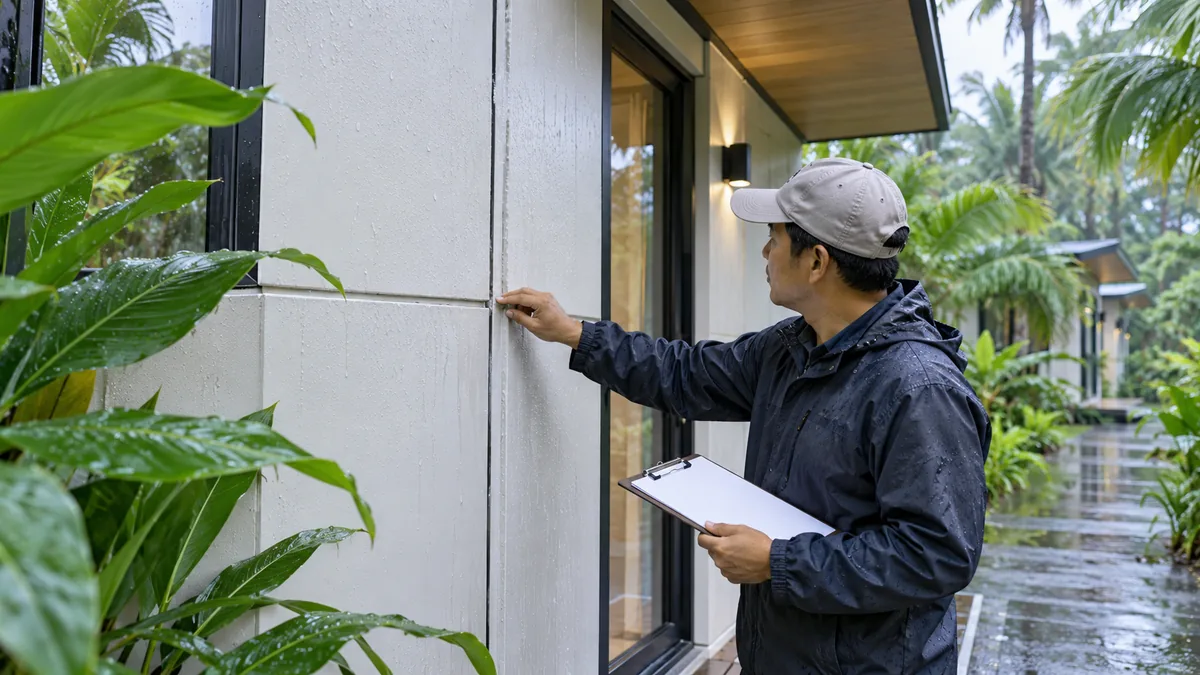
The weather envelope includes roof, walls, floor perimeter, doors, windows, joints, sealants, and other elements separating the interior from outdoor conditions. Inspect visible areas for cracks, gaps, impact damage, corrosion, loose trim, deteriorated-looking sealant, blocked drainage, and changes around openings. Compare observations with the baseline photographs. The goal is to identify change, not diagnose a hidden structural problem from appearance alone. Use safe access; do not climb onto roofs or use ladders without appropriate training, equipment, and site controls. Arrange qualified personnel for elevated or concealed areas. Avoid applying new sealant over unknown material or covering a joint before movement or water entry is understood. After storms, transport, nearby construction, or impact, perform an additional check when safe. Record the event, location, photographs, and any change in door operation or alignment. Structural movement, loose anchoring, significant corrosion, or a newly distorted opening needs prompt professional assessment. A consistent observation history helps the responsible technical reviewer understand whether a defect is new or recurring.
Maintain equipment records
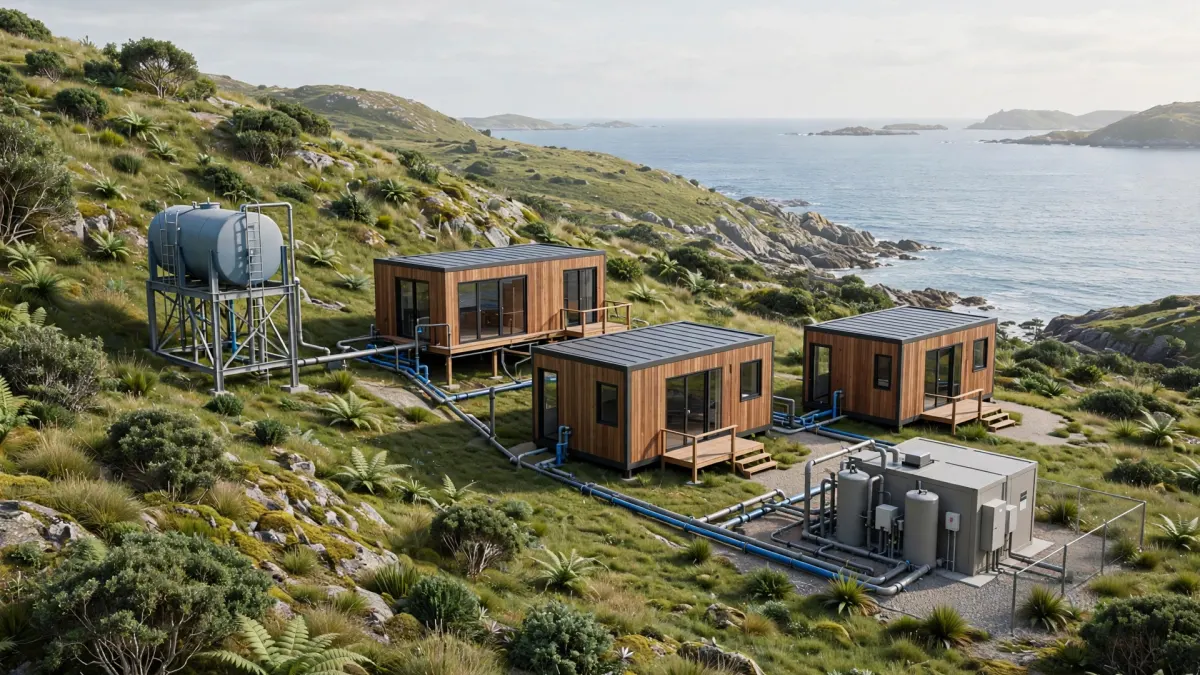
For each maintainable item, record name, location, manufacturer, model, serial number if present, installation or handover date if known, manual, warranty terms, service contact, and consumables. Include air-conditioning, water heaters, pumps, ventilation equipment, appliances, controls, and optional power or water equipment actually supplied. Do not create records for items absent from the installed configuration. Keep filter types, lamp or battery specifications, access needs, and approved replacement-part details where available. Attach invoices and service reports to the asset record. When replacing a component, note old and new identifiers, reason, service provider, and updated instructions. This prevents a future technician from relying on documentation for equipment no longer installed. Warranty terms vary by component and supplier; do not infer coverage or duration from a general handover date. Keep the actual documents and claim steps. Some work may need an authorized service provider, so check the terms before arranging changes that could affect coverage. Records become more valuable when comparing repeated faults, spare-part requirements, and repair costs.
Triage minor repairs
Separate safe housekeeping from technical repair. Staff can report a loose handle, damaged finish, accessible blocked strainer, or missing label, but permitted action depends on training, instructions, and local rules. Refer work involving live electricity, gas, structural anchors, lifting points, concealed plumbing, roof access, or suspected hazardous materials to qualified professionals. For each issue, record symptom, exact location, date, conditions, photographs, effect on use, and immediate action. Do not write a diagnosis unless confirmed. If a repair is temporary, label it temporary, record who authorized it, and set a follow-up. A container placed beneath a leak may reduce immediate damage but does not resolve the cause. Before ordering a replacement, identify the component and dimensions or part number where possible. Check whether replacement affects adjoining finishes, water sealing, electrical protection, or warranty. If the fault returns after repair, escalate it instead of repeating the same patch. Triage directs work to the right person and urgency; it does not authorize operators to work beyond their competence.
Turn work orders into evidence
A work order should create a useful record rather than simply mark a task complete. Give each request an ID and record the reported symptom, priority, assigned person, approval, work performed, materials, before-and-after photographs, close date, and recommended follow-up. Note whether the cabin was taken out of service and who authorized its return. Attach contractor reports to the same record. Periodically review the log for patterns: repeated leaks in one location, similar failures across units, quickly clogged filters, doors needing frequent adjustment, or damage associated with a cleaning method. Compare like with like and avoid conclusions from a single event. If a pattern suggests a design, installation, training, or environmental issue, ask the relevant technical party to assess it before making a broad change. Use the year's records to plan the next operating period: identify components needing closer observation, difficult tasks, consumables to stock, and missing documents. Records can inform whole-life choices about repair, refurbishment, replacement, or operating changes. Keep observations separate from confirmed causes and actual costs separate from estimates.
Sources
This guide is a general operating framework and does not prescribe a universal maintenance interval, service life, or technical limit. Use the manuals for the actual equipment and seek site-specific advice from qualified local professionals.
- MK Mobile House, About and responsibility split: https://mkmobilehouse.com/about/
- MK Mobile House, Technical Resources: https://mkmobilehouse.com/technical-resources/
- MK Mobile House, product and configuration information: https://mkmobilehouse.com/products/
The owner or operator must assign local maintenance roles and follow applicable health, safety, building, electrical, plumbing, and environmental requirements. Foundations, anchoring, installation, utilities, permits, inspections, and final approval remain destination-side responsibilities.