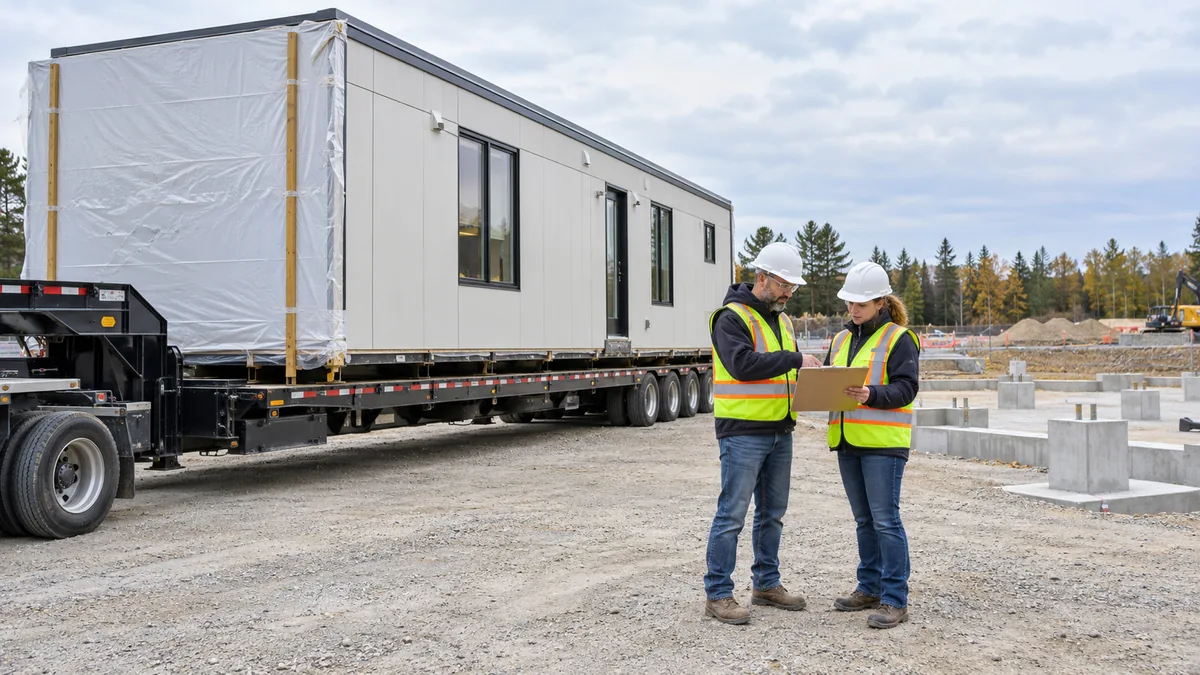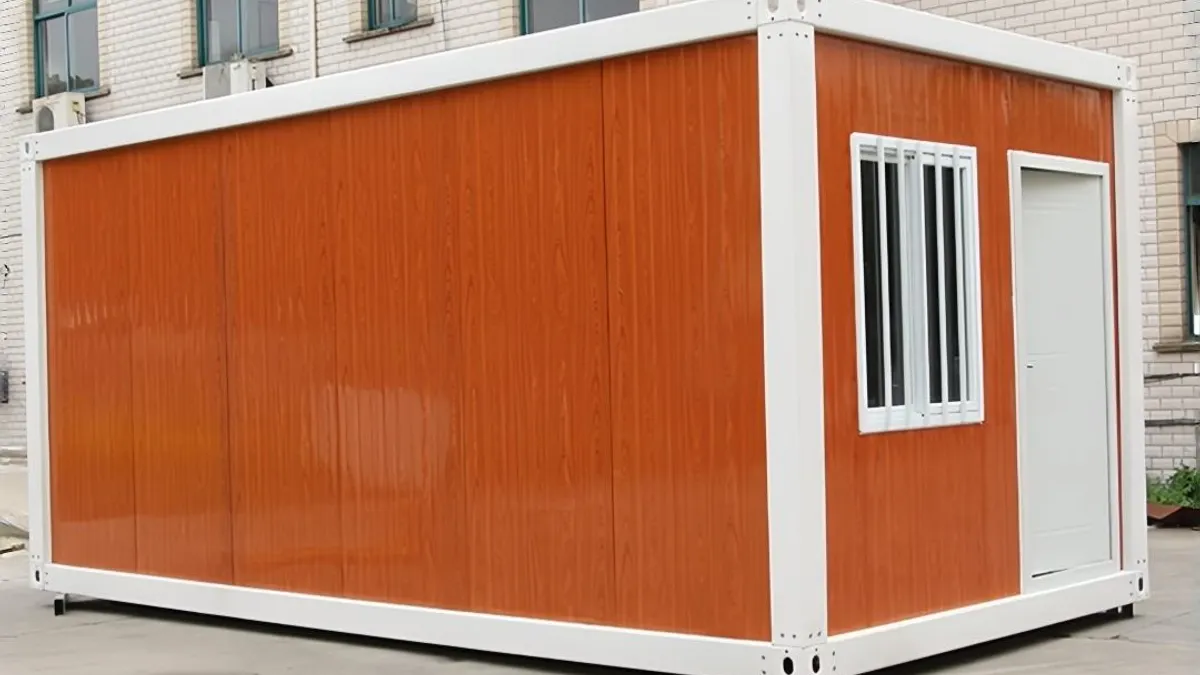
The cover is an AI-generated editorial concept, not a photograph of a completed project or evidence of technical approval.
An industry discussion with a practical cabin question
The Modular Building Institute has scheduled World of Modular Europe for 12–14 October 2026 in Amsterdam. Its published programme addresses scaling, product-based delivery and standards. These subjects deserve attention beyond large housing developments. A campground or resort operator ordering cabins in successive batches faces a related commercial question: what must stay consistent for the second purchase to benefit from the first?
There is a useful bridge to outdoor hospitality in the institute’s April 7 article, which includes leisure among established modular applications and discusses the difficulty of inconsistent demand. That context supports examining repeat purchases. It does not establish a cabin-specific conference conclusion or prove that a particular supplier can meet an operator’s programme.
The framework below is our editorial application of those industry questions to cabin procurement. It uses the announced event and published agenda, rather than reporting speeches or outcomes. The practical aim is to turn a proposed series of purchases into a controlled building and operating programme. A repeatable programme needs a stable product definition, visible local variations, realistic order commitments and a way to learn from occupied cabins before the next batch is released.
Turn the next order into an operating brief
An operator may say it wants another ten cabins because last summer was busy. That is a useful opening observation, but it is an incomplete purchasing instruction. The next batch could serve family groups, replace ageing rooms, extend the opening season or support another property. Each purpose changes the room mix, servicing requirements and evidence needed before ordering.
Prepare a short operating brief with the intended guests, occupancy pattern, opening window, housekeeping approach, storage needs and maintenance access. Identify which observations come from existing operations and which remain assumptions. A waiting list for holiday weekends does not, by itself, establish demand for every week of a longer season. Nor does sufficient room demand establish enough staff, water or wastewater capacity.
Then describe the decision the next batch must enable. For example, a property may need family accommodation while preserving a manageable linen and cleaning routine. That gives the team something more precise to test than an attractive elevation. Review this brief with the people who will operate the cabins. Their comments should shape the selected configuration before procurement turns preferences into costly commitments.
Define a cabin family that can actually repeat
A cabin family is a documented set of related configurations, not merely a model name appearing on several quotations. Establish a baseline drawing revision, room arrangement, structural description, envelope specification and equipment schedule. Record the options that can change without quietly producing a different technical proposition. A finish colour and a changed bathroom layout do not have the same implications.
Assign a person to maintain this baseline and require every quotation to identify its exact version. Include the drawings and schedules in the agreed document list. If a later offer says “same as previous order”, the purchaser should still be able to establish which previous order, which variations and which replacements are intended. Photographs cannot resolve every concealed assembly or equipment change.
The stable family also needs an agreed method for substitutions. Ask how the supplier will notify the buyer when an appliance, window component or finish becomes unavailable. The replacement should be reviewed for installation, operating needs, maintenance and relevant project requirements. A programme gains little from repeating the exterior while accumulating incompatible parts behind it. Preserve the information needed to compare each batch with the baseline.
Give every site its own variation schedule
Divide the specification into three practical layers: common to the family, selected from controlled options, and dependent on the destination or site. This makes repetition useful without treating every property as identical. An operator can preserve a recognisable room experience while allowing qualified local teams to resolve matters that genuinely change.
The site-dependent layer may include ground conditions, foundations, applicable design actions, fire strategy, accessibility, energy requirements, utility connections and installation constraints. The correct scope depends on the particular building and jurisdiction. Another property in the same country may still present different conditions. Approval or successful operation at the first site does not establish suitability or approval at the second.
Keep a variation schedule showing the original requirement, proposed change, responsible reviewer and consequence for drawings, price, manufacture and operation. A variation without an owner is likely to reappear as a late question. Close the schedule before requesting a firm repeat quotation, or make unresolved items explicit conditions. This gives the supplier a precise comparison and helps the operator distinguish a routine option from a change requiring further technical work.
Agree when design decisions become commitments
A single instruction to “freeze the design” can hide several different decisions. Start by agreeing the operating layout and site interfaces, then confirm the technical configuration, selected finishes and production documents at suitable stages. The team should know which decisions must be settled before materials are purchased and which can remain open without disrupting work.
For each stage, name the person authorised to approve the baseline and the document that records approval. Establish a change procedure covering the reason, affected drawings, technical review, cost and schedule consequences. A message asking whether a larger window is possible is an enquiry. It becomes an instruction only through the agreed process. That distinction protects both parties from different interpretations of informal conversations.
Operators should also decide how changes carry forward. A one-off accessibility adaptation should not silently replace the standard arrangement for every later cabin. Conversely, an accepted correction to a recurring problem should reach the next batch’s documents. Record whether each change affects one unit, one batch or the whole cabin family. The result is a programme that can improve without losing control of its identity.
Separate demand forecasts from factory commitments
A forecast helps a manufacturer understand possible demand. It should show expected quantities, timing, assumptions and the date of the next review. It is different from a released purchase order. If the operator has not secured a second site or confirmed funding, the forecast should state that condition plainly rather than becoming an implied delivery promise.
Capacity discussions need their own written terms. Ask what any proposed reservation covers, how long it lasts, what payment or cancellation conditions apply, and what must happen before production can start. Do not assume that an annual purchasing intention reserves materials, labour or a factory slot. Equally, do not assume a reservation permits the operator to change the configuration without consequences.
A framework arrangement can establish specifications, commercial procedures and the way individual orders are placed. Its practical value depends on the terms actually agreed. Procurement teams should obtain appropriate contract advice where needed and distinguish estimated annual volume from any binding minimum. A smaller confirmed first batch may be more useful than an ambitious schedule that neither side can act on. Review commitments whenever the opening date, site readiness or operating brief changes.
Release each batch through a readiness gate
Before releasing a batch, bring the relevant workstreams together at a documented readiness review. Check the approved configuration, destination-specific design responsibilities, open approval conditions, site interfaces, payment prerequisites and the delivery assumptions on which the schedule depends. Identify what is confirmed, what has a credible completion plan and what remains unknown.
The gate should end with a decision and an accountable owner. Release may be appropriate when prerequisites are met. Conditional release needs defined limits and an understanding of who carries the resulting exposure. Pause is a valid outcome when an unresolved foundation or local approval question could force a material change. A green mark in a spreadsheet should lead to evidence, not merely another green mark.
Agree how delays are handled before they occur. If the site is late, who arranges storage, protection, insurance and a revised dispatch sequence? If the factory changes its schedule, who updates the opening plan and local installation bookings? Detailed transport preparation belongs in the existing delivery and site-readiness guide. Here the programme-level task is to prevent an order release from outrunning the decisions that make its destination usable.
Compare programme value across several purchases
Repeat purchasing creates value when earlier decisions remain useful. Compare offers using the same baseline and clearly identified variations, then review documentation, service access, replacement parts and the practical cost of operating different batches. A lower unit price may still be attractive, but it should be understood alongside the scope and operating consequences attached to it.
Consider the housekeeping team finding two different door-lock systems, three appliance controls or incompatible consumables across apparently identical cabins. Variety may be justified, especially when equipment improves or requirements change. The question is whether the operator knowingly accepted the additional training, stock and servicing tasks. Ask for relevant parts references and maintenance instructions when assessing substitutions.
Programme value also depends on avoiding premature standardisation. Buying an unsuitable layout repeatedly does not become sensible because the drawing is familiar. Review real occupancy feedback before extending a configuration. Include allowances for changing site conditions and uncertain later phases in the financial model, and label estimates honestly. The separate quotation and landed-cost article explains cost boundaries. This review asks whether the selected family remains practical over successive purchases, without assuming any universal saving or return.
Assign responsibility at the factory and destination
Use a responsibility schedule with named organisations or roles, expected deliverables and acceptance points. Factory supply may cover agreed configuration, production communication, inspection, packing and documentation. Destination work may involve local design professionals, permitting authorities, installers, utility contractors and logistics providers. The actual allocation must be established in the project agreements.
For every interface, identify who provides the input and who checks that it can be used. A foundation designer may need confirmed loads and connection details; the supplier may need approved site-interface requirements before completing production drawings. Neither party should treat an unanswered request as acceptance. Record dependencies so a missing input does not disappear between different companies’ schedules.
Keep inspection and operating acceptance distinct. A pre-shipment inspection can address agreed factory scope, while installed systems and the completed site require their own appropriate checks. The existing factory/site commissioning article explores those interfaces further. MK Mobile House’s factory-side and supply-side role must be defined for the actual order; a programme discussion does not establish local licensing, engineering responsibility or final approval authority. Clear boundaries make collaboration more useful because each participant knows which answer it owes.
Work through a hypothetical two-property programme
Consider a fictional operator planning six cabins at an existing campground and a possible four at another property. These quantities are an illustration, not a demand forecast or delivery benchmark. The first property has an operating team and a proposed utility connection plan. The second property has a promising location, but its local design and approval route remains unresolved.
The operator defines a common room layout and equipment schedule for the first six cabins, with one accessible configuration subject to the project team’s review. It records the four possible later cabins as a conditional forecast. After the first configuration review, the second property’s adviser identifies a requirement that could alter part of the envelope. The operator opens a variation record instead of describing the second order as identical.
At the next review, the team can keep common interior components while commissioning the necessary site-specific work. It can also defer the second batch if the implications remain unclear. Meanwhile, feedback from cleaning and servicing the first property can inform later documents. The useful result is not a fictional saving: it is a visible distinction between committed supply, controlled product choices and a later project that still needs decisions.
Use a repeat, adapt, pause or re-source matrix
Use the following matrix at each proposed repeat purchase. Its purpose is to make a decision traceable, rather than award a supplier a generic score. The evidence should relate to the precise configuration and destination under consideration.
| Decision | Evidence to review | Responsible lead |
|---|---|---|
| Repeat | Baseline remains suitable; prior issues closed; current site inputs confirmed | Buyer and relevant technical reviewers |
| Adapt | Defined variation; effects on documents, price, manufacture and operation assessed | Named change owner with required advisers |
| Pause | Material site, approval, funding or operating assumption unresolved | Programme owner |
| Re-source | Requirements or support needs cannot be met within the agreed approach | Procurement lead with operating team |
Re-sourcing deserves the same discipline as repeating. Check whether the new supplier can use the proposed information, what it must redesign and how replacement components will be supported. A similar photograph is insufficient evidence of interchangeability. Where legal or proprietary restrictions affect drawings, resolve permitted use before passing documents onward.
Set the next review date and record what would change the decision. This avoids a paused batch remaining indefinitely on a supposedly confirmed schedule. It also allows the manufacturer to distinguish active work from a project that needs another commercial conversation.
Carry operating feedback into the next batch
The first occupied batch should produce a short learning record. Ask housekeeping, maintenance and guest-service teams which features help and which create recurring work. Distinguish observed defects from preferences, operating mistakes and site-related problems. Record the affected unit, configuration, date and action, with photographs or service information where useful. One complaint should trigger investigation rather than an automatic change to every cabin.
Close corrective actions before repeating the affected detail. When a change is justified, update the controlled documents and identify the first batch that will receive it. Retain information needed to service earlier units. Successful features deserve the same attention: keeping a reliable component can be more useful than making every later purchase look slightly different.
An initial programme enquiry can therefore be concise and concrete: intended cabin use, first confirmed site, possible later properties, quantities and confidence levels, required operating dates, common configuration, known variations and the local parties involved. Include the decisions still outstanding. That brief gives a supplier a basis for a useful response and gives the operator a record it can revise as evidence improves. Repeatability then becomes a managed capability of the programme, rather than an assumption attached to the words “order again”.
Sources
Modular Building Institute: Europe’s Modular Market Is Expanding, but Consistency Still Matters, April 7, 2026 — dated industry context on leisure applications, demand consistency and local market differences.
Modular Building Institute: World of Modular Europe — official announced event dates and location: October 12–14, 2026, Amsterdam. The page does not display its publication date.
Modular Building Institute: World of Modular Europe Agenda — published programme context concerning scale, product-based delivery and standards; page publication date not displayed.
The procurement framework and fictional example are editorial analysis. These sources do not establish conference outcomes, supplier performance or approval of an individual cabin project.