Start with the operating season
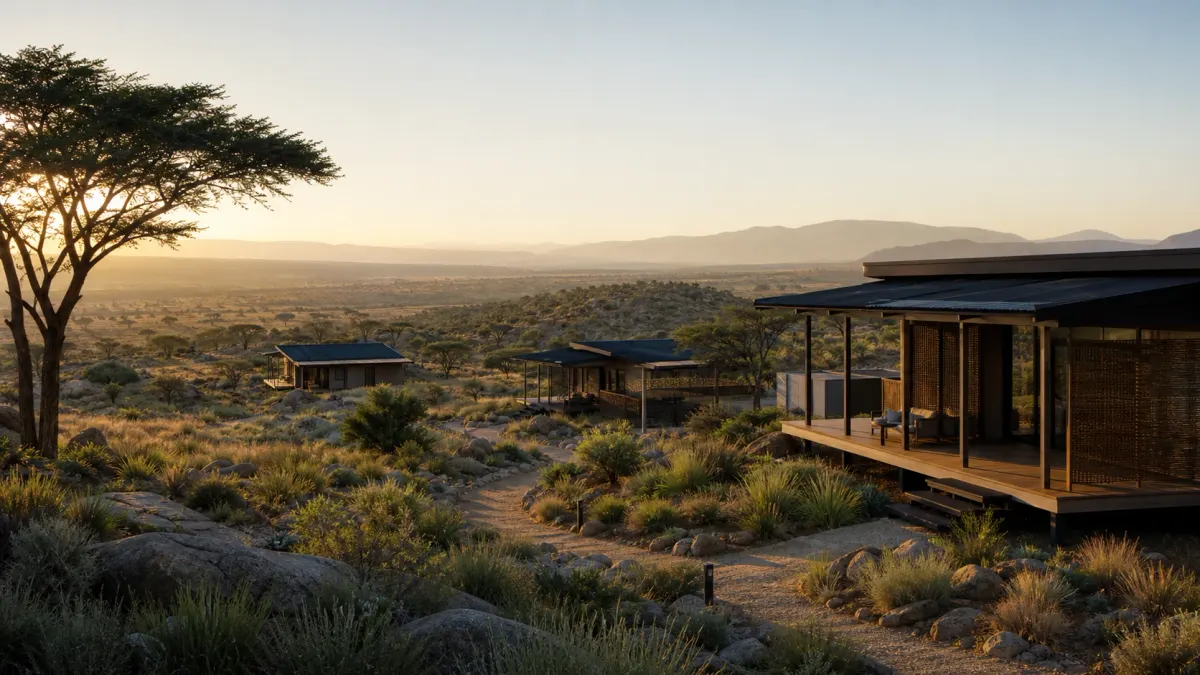
Remote hospitality in East Africa is often described through the guest view: a quiet room, a landscape, and a distinctive arrival. The project team has to manage a more demanding system behind that view. Guest rooms, staff accommodation, kitchens, laundry, water, power, waste, roads, vehicles, maintenance, safety, and seasonal access all have to work together. A modular unit can simplify part of the supply chain, but it does not remove the remote-site decisions.
Test remote access before choosing a format
Start with the operating season and the access calendar. Record when the lodge is open, when roads become difficult, when heavy rain affects crossings, when supplies arrive, and how long spare parts or technical support may take to reach the site. Identify whether the project is a permanent lodge, seasonal camp, staff base, visitor facility, or phased extension. The right room mix depends on that operating intent.
Compare complete delivery systems
Remote access should be tested before the module format is fixed. Map the route from factory packing to port or regional depot, inland road, gate, bridge, crossing, airstrip or landing area if relevant, staging ground, lifting point, and final location. Record width, height, turning, axle or bridge constraints, soft ground, slope, recovery access, and the sequence of buildings. A unit that fits on a drawing may not fit through the actual route during the wet season.
Define water as an operating system
Compare complete delivery systems. Volumetric rooms can arrive with more work completed, but they may require larger trucks, cranes, temporary protection, and carefully timed placement. Detachable or flat-pack formats may be easier to move through constrained routes while demanding more site assembly, sealing, alignment, supervision, and weather protection. The comparison should include transport, storage, lifting, local labour, tools, inspection, and the consequences of a damaged component.
Record power and backup needs
Water is usually an operating question before it becomes a room question. Define guest use, staff use, kitchens, laundry, cleaning, fire systems, water treatment, storage, pumps, and wastewater. Consider dry-season reliability, rainwater, boreholes, delivered water, treatment, storage levels, and access for cleaning and repair. Local engineers must confirm the final system, but the supplier brief should identify where tanks, plant, service doors, and utility interfaces sit.
Connect guest privacy with staff movement
Power planning needs the same discipline. Cooling, lighting, refrigeration, pumps, communications, security, water heating, laundry, and kitchen equipment create a daily load. A remote project may also need generators, batteries, solar systems, fuel storage, or another backup strategy. Do not treat an energy label as a complete operating solution. Record which equipment is factory-supplied, which is local, who commissions it, and who maintains it.
Review the actual environmental setting
Guest privacy and staff movement should be planned together. The guest route includes arrival, views, outdoor sitting, bathroom access, and night lighting. The staff route includes cleaning, linen, food, waste, maintenance, security, and emergency access. Keep service traffic away from guest-facing areas where possible. Provide a protected place for linen and supplies, and make sure staff can reach each room safely in rain, heat, darkness, and low-visibility conditions.
Plan guest-service support spaces
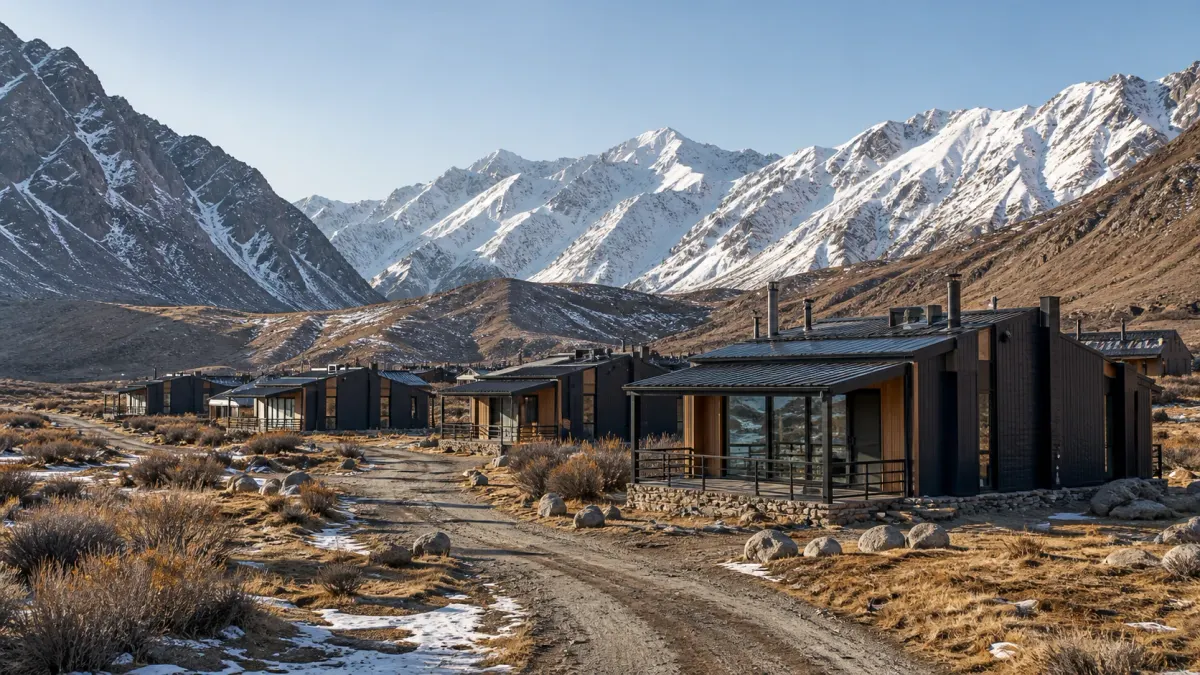
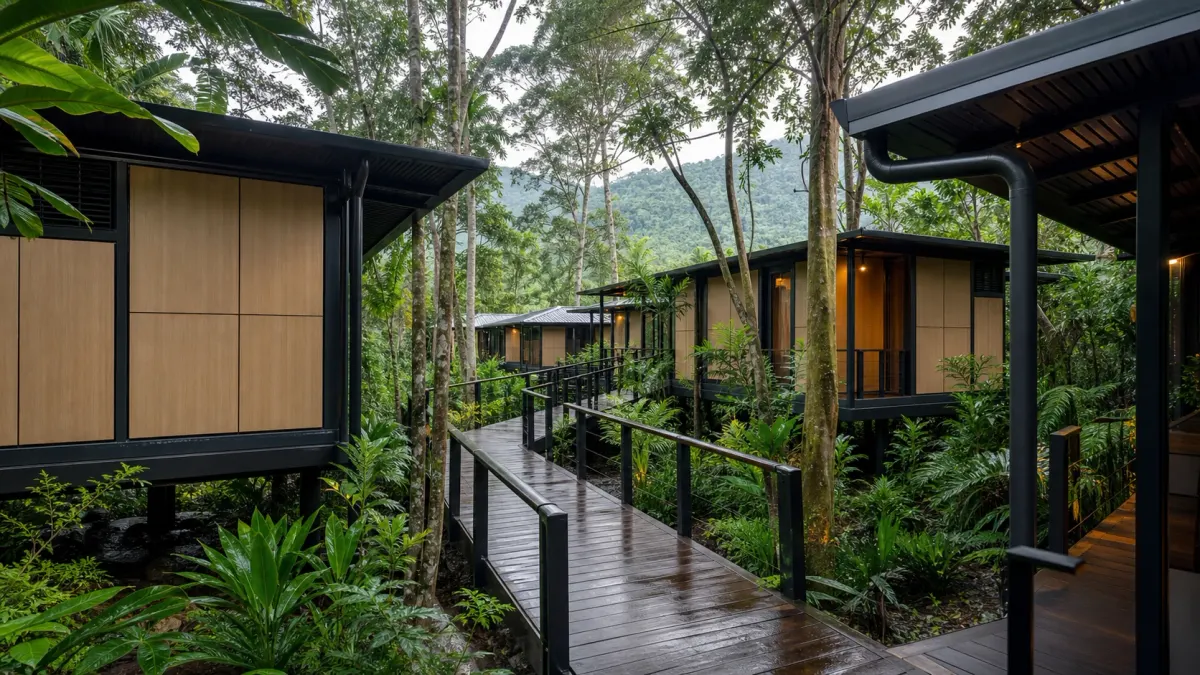
The environmental setting deserves a careful, non-generic review. Coastal sites may add humidity and corrosion. Hotter inland sites may increase shade, cooling, dust, and water-management needs. High-elevation sites may change heating, wind, access, and construction assumptions. Rainy locations require drainage, erosion control, and route planning. “East Africa” is not one technical specification; the destination team must define the actual site inputs.
Prepare for supply interruptions and local repair
Guest-service support is part of the room plan. Include reception or arrival control, kitchens, food storage, laundry, staff rooms, equipment storage, waste, maintenance, first aid, and emergency coordination. If the lodge expands, reserve a route and utility capacity for later rooms without placing construction traffic through occupied areas. A small support unit can sometimes protect the operation more than an additional guest room.
Use a pilot block to validate the route
Before repeating a room type, commission one complete unit. Test the delivery route, lifting, placement, seals, bathroom drainage, water pressure, cooling, lighting, furniture, cleaning reach, service access, and guest movement. Review the result with the owner, operator, local engineer, installation team, and maintenance lead. Record the changes before the next unit is released.
Keep factory and destination duties clear
Remote hospitality has a longer maintenance chain than an urban hotel. A failed pump, door closer, water filter, lock, circuit protection device, seal, or refrigeration component may require a long trip or a consolidated shipment. Before ordering, list the components that can stop a room or service area from operating, identify equivalent local parts where acceptable, and decide which items should travel with the first shipment. This is a planning exercise, not a claim that every spare part will be available locally.
Create a small critical-spares register with part references, quantities, storage conditions, inspection intervals, and an escalation contact. Train the local team on routine checks and define when a specialist is required. The register should cover water treatment, pumps, electrical protection, cooling, sanitary fittings, doors, windows, roof and wall seals, and any equipment included in the confirmed package. Keep records of substitutions so later repairs do not create incompatible combinations.
The operator also needs a guest-communication procedure for temporary outages. Decide how water, power, access, or room faults are reported, how a room is relocated or taken offline, and how the owner records the root cause. A clear process protects guest experience without implying that a remote site can operate without local maintenance capacity.
One complete pilot block is more informative than a sample room photographed at the factory. Use it to validate the actual sequence: packing, border or port transfer, inland movement, site arrival, unloading, lifting, placement, assembly, sealing, utility connection, cleaning, and opening. Invite the operator and local technical team to record time, tools, weather interruptions, access conflicts, defects, and training needs.
The pilot should have an agreed acceptance checklist. Include room comfort, drainage, water pressure, electrical protection, lighting, cooling or heating, furniture, pest-control interfaces, service access, fire and emergency arrangements, and the ability to replace ordinary parts. After the review, issue a controlled revision to drawings, packing lists, installation instructions, and responsibility assignments. Do not present a successful pilot as proof that every country or site will have the same result; use it to make the next decision better informed.
MK can discuss factory-built product configuration, production communication, packing, pre-shipment review, and export handover for the confirmed scope. Foundations, local transport, lifting, installation, utilities, permits, field inspection, and final approval remain project-specific responsibilities that must be assigned to qualified local parties. This is especially important for remote hospitality because a gap in responsibility can be difficult and expensive to repair later.
The best remote-lodge brief is not the one with the most dramatic image. It is the one that connects the guest promise to access, water, power, staffing, maintenance, seasonal operation, and a clear factory-to-site handoff. That discipline gives the project a better chance of remaining comfortable and serviceable after the opening photographs are taken.
Keep the procurement record aligned with the field record. Packing lists, delivery photographs, installation checks, and utility test results should be stored against the same building and room identifiers used by the operator. This makes a later warranty question easier to investigate and helps the team distinguish a factory item from a site-installed item without guessing.