Define the Brief and the Destination
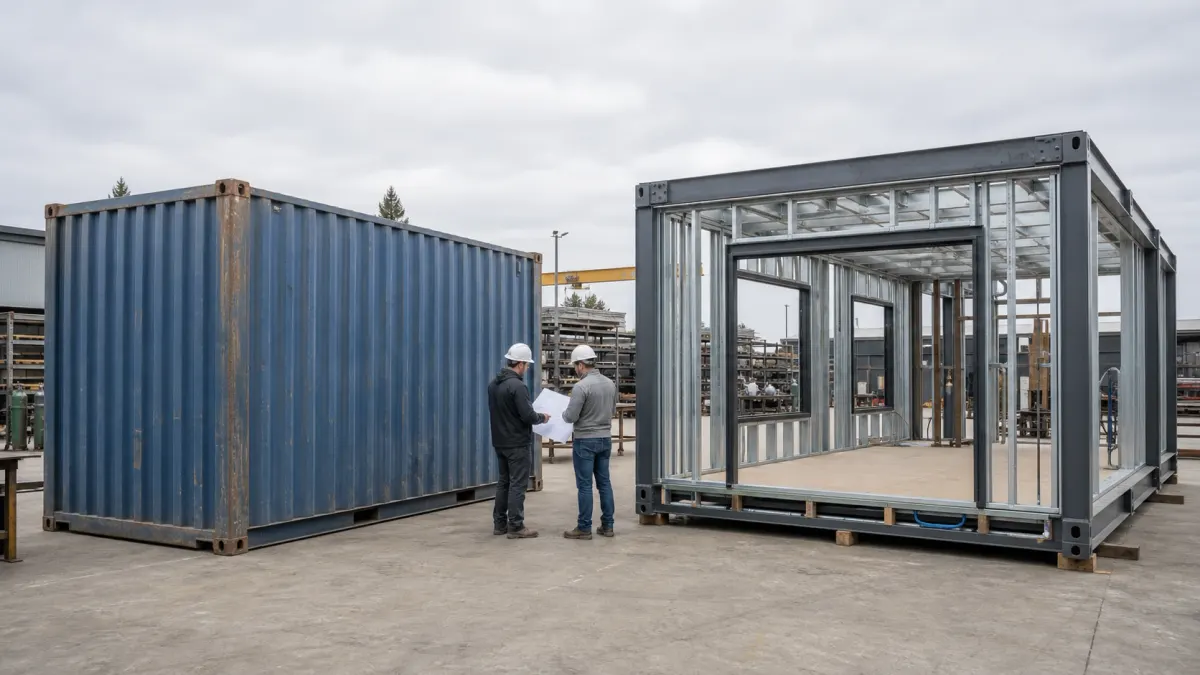
A first modular housing import begins with a written project brief, not a catalog photograph. Identify the destination country and actual site, proposed building use, expected occupants, approximate quantity, climate considerations, intended service life, and whether modules must be relocated later. Distinguish a factory-built cabin from a road trailer or freight container: similar-looking products may have different structures, shipment forms, and local treatment.
Appoint one buyer-side coordinator who maintains a document register and responsibility matrix. Name the intended importer of record, customs adviser, freight coordinator, destination installer, site designer, and local authority contacts as early as practical. If a role is unfilled, mark it open instead of assuming the supplier will do it. Clearly separate product decisions from the land and building process at destination.
Foundations, anchoring, local installation, utilities, permits, inspections, and final approval are destination-side responsibilities, to be performed and coordinated by the buyer's local project team and relevant professionals or authorities. A manufacturer can supply documents for review, but factory completion does not imply that a building may be installed or occupied. This checklist organizes decisions from the initial brief to local handover; it provides planning questions, not customs or legal advice.
Verify Product Type and Intended Use
Ask the supplier to describe what the goods actually are: completed modules, partly assembled buildings, flat-pack components, container-based structures, or another defined configuration. Record dimensions, materials, equipment, openings, intended use, assembly stage, and whether individual pieces are shipped together or separately. The trade name alone is not a technical description for customs, engineering, or installation.
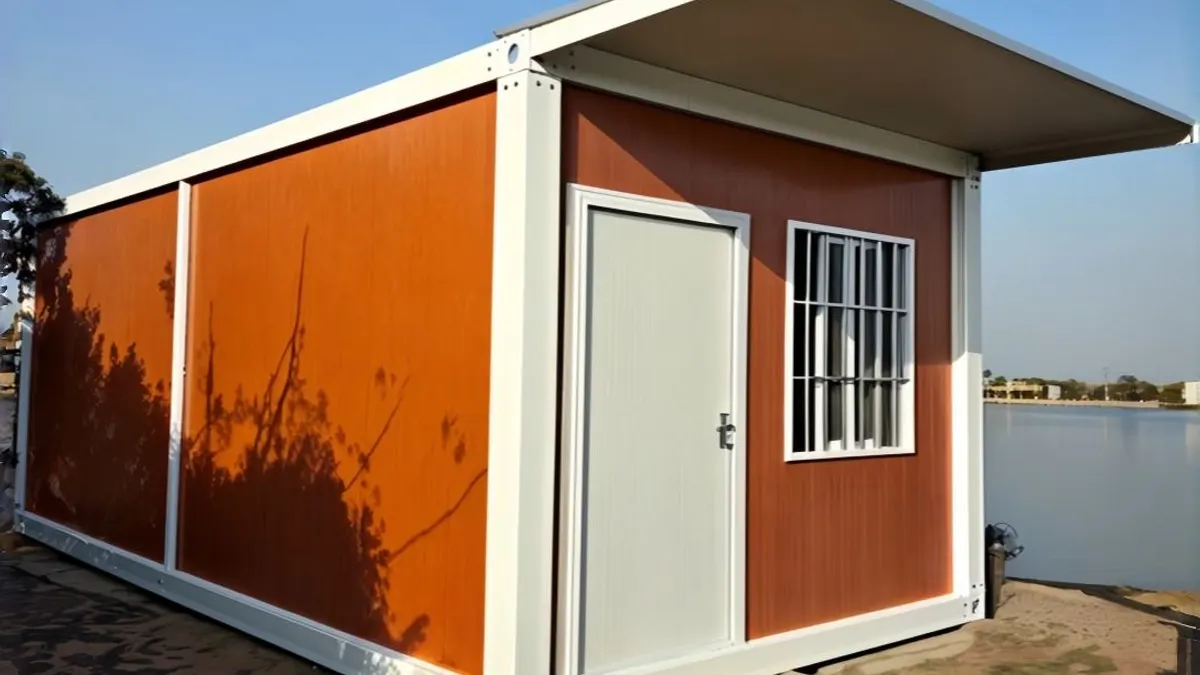
Clarify what will be installed at the factory and what must be finished locally. Plumbing fixtures, wiring, HVAC equipment, furniture, external stairs, decks, and utility connectors may fall on different sides of the supply boundary depending on the order. Write a configuration list and identify exclusions. Do not assume that a display photograph shows the exact goods offered.
Compare the selected product concept with site access, local building category, occupant needs, climate, maintenance, and the destination team's installation skills. Qualified local professionals should identify the relevant building and site review path before the buyer locks a specification. A module that fits transport dimensions can still require different field connections or authority review. Keep questions on product classification for customs separate from land-use and building classification at the destination.
Freeze Drawings and the Scope Register
Create a controlled set of drawings before authorizing fabrication. Include plans, elevations, overall transport and installed dimensions, door and window positions, relevant structural support and lifting locations, and utility connection points. Keep a revision number, date, author, and reviewer on each drawing. A conversation about changing a window or room layout is not a confirmed change until it appears in the approved document set.
The scope register should list each model, option, finish, loose component, accessory, and installation activity, with an owner and document reference. Ask which drawings are preliminary and which govern the purchase. Maintain a change log showing the reason, affected documents, approval owner, and whether transport or site design must also be reviewed.
Send the drawing package to the destination engineer, utility trades, installer, and freight coordinator for interface review. They may identify incompatible anchor positions, service penetrations, access widths, or lifting constraints before these turn into field problems. Do not allow factory production sign-off to be mistaken for local design approval. Foundations, anchoring, utilities, site installation, permits, inspections, and final approval remain with the destination-side team.
Map Factory, Export, and Destination Responsibilities
Prepare a responsibility matrix that follows the product from the factory gate to a ready-for-review local installation. Separate factory assembly, loose parts, packing, origin transport, export declarations, main carriage, insurance arrangements, destination customs, port handling, inland transport, unloading, lifting, foundations, field connections, inspection, and final handover. Record who performs each task, who supplies documents, and who accepts the result.
A quotation or commercial agreement should identify the agreed Incoterms rule, its named place, and applicable edition if Incoterms are used. The term allocates defined transport responsibilities and risks; it does not settle customs classification, ownership of local site works, or every project obligation. Ask how practical exclusions are described in the contract rather than relying on a three-letter abbreviation.
Review dependencies: a truck cannot enter a site without access planning, and the installer cannot set the unit without confirmed foundation drawings. Have the importer, broker, logistics provider, local engineer, and supplier review the same boundary document. Mark unresolved scope items and the person who must close them. Avoid assumptions that paperwork supplied at origin automatically satisfies destination entry or building requirements.
Prepare Packing and a Traceable Packing List
Packing starts with knowing how each module and loose item will travel. Ask for a packing concept identifying the number and type of transport units, packed dimensions and masses, lifting and handling restrictions, weather protection, blocking and securing interfaces, and whether any equipment must be removed before shipment. The actual method should be checked with the freight provider and applicable transport rules.
Build a packing list that maps the order to physically identifiable packages. For each package, record a reference number, description, count, dimensions, gross mass where available, and its relation to the approved order or drawing. Separate factory-installed equipment from loose fittings, spares, hardware, and documentation. Label packages in a way that can be checked at dispatch, arrival, and installation without guessing what is inside.
Ask the supplier which party checks packing and how exceptions are recorded. Photographs can support the record but should not replace a signed list or agreed inspection process. Identify fragile surfaces, access to lifting points, moisture-sensitive materials, and items needed first at the destination. A traceable packing list helps the importer, freight agent, customs broker, receiving team, and installer refer to the same shipment reality.
Check Shipping Routes and Handling Limits
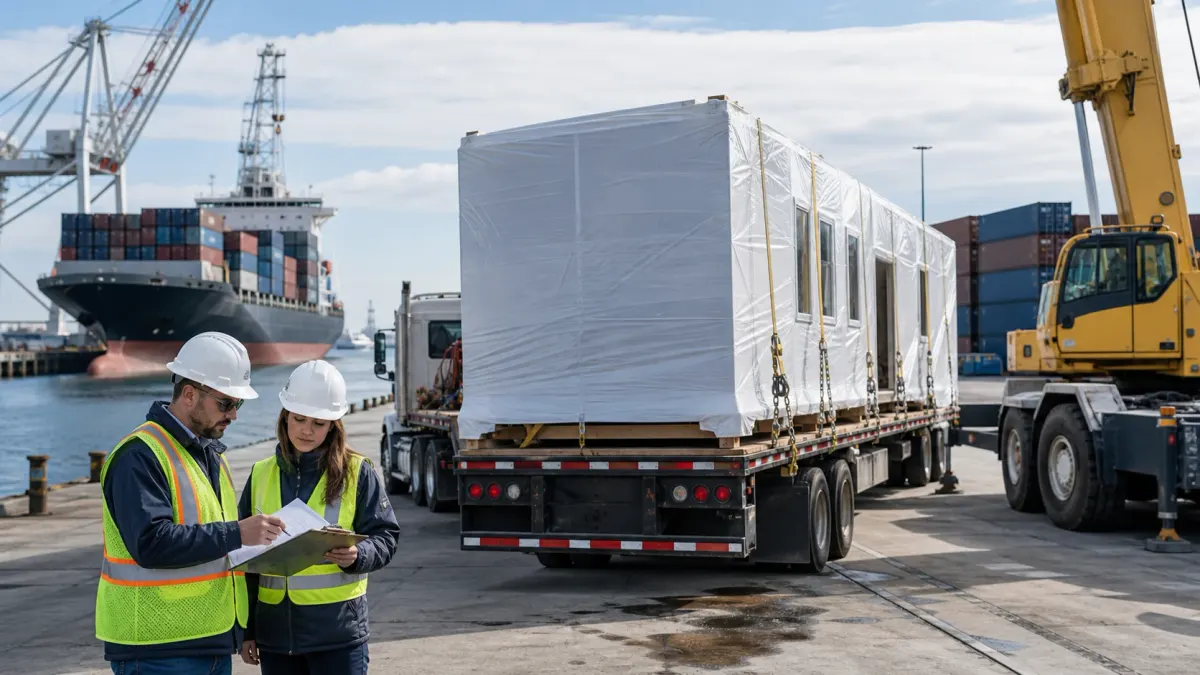
The transport route begins at the factory but should be assessed through the actual site gate. Confirm origin collection, port or border handling, transshipment where relevant, destination terminal, inland roads, bridge or clearance constraints, and final unloading access. Shipping format can change the available route and handling equipment, especially for large completed modules. Ask the freight coordinator to assess the selected cargo dimensions and proposed equipment rather than using generic container assumptions.
Verify the declared packed weight and handling points against the carrier's requirements. Identify who prepares securing instructions, who appoints lifting contractors, and what must be checked when the cargo changes vehicles. Weather protection, terminal storage, and exposure during transfer should be considered in the packing and inspection plan.
At the destination, confirm turning radius, overhead services, ground bearing for trucks or lifting equipment, staging space, and restricted working hours where applicable. The arrival sequence should match foundation readiness and utility preparations. Route or equipment feasibility is not an approval guarantee, and constraints may be found during professional checks. Keep a contingency and escalation process without making promises about delivery dates or customs release.
Review Customs Classification With a Specialist
Customs classification must be based on what is imported and how it is presented at the border, not just on a marketing phrase such as “container house.” Give the customs broker or other qualified trade professional the actual description, materials, functions, completeness, packaging format, drawings, photos where useful, origin information, and components included. Different configurations may require different analysis.
Ask the importer of record and its adviser to identify the applicable tariff schedule and classification review process for the destination. Check whether binding rulings or other advance decisions are appropriate and available locally. Do not copy a tariff code from another country or from an old shipment without review. Keep customs classification separate from the local building-permit category: they answer different questions.
Origin, valuation, trade remedies, taxes, and documentary requirements can depend on jurisdiction and the facts of the transaction. This guide supplies no code, tax result, or assurance of release. Record the adviser, date of review, factual product description used, open questions, and who is responsible for the final declaration. When the product design or shipment format changes, send the change back for customs review before filing.
Reconcile Commercial and Transport Documents
Before dispatch, create a document checklist with the exporter, importer, freight forwarder, and customs broker. Depending on the transaction and destination, documents may include the commercial invoice, packing list, transport document such as a bill of lading or waybill, origin statements or certificates where applicable, insurance documents if arranged, export declaration references, and destination-specific forms. The exact list must be confirmed by the relevant professionals.
Cross-check the parties' names and addresses, goods description, quantity, package count, dimensions or weight entries as applicable, currency and transaction details where required, named Incoterms place, and document references. Information should be internally consistent and reflect the goods actually shipped. Avoid inventing product descriptions merely to make paperwork look simpler.
Establish who issues each document, who verifies it, how revisions are communicated, and which final versions reach the importer before entry procedures. A mismatch between invoice, packing list, transport record, and physical packages can create avoidable clarification work. Digital copies improve coordination but should not be assumed to replace originals or platform filings where a destination requires them. Customs documentation is distinct from local foundation and occupancy approval.
Set Pre-Shipment Inspection and Exception Rules
Agree what will be checked before the cargo leaves origin. A pre-shipment review might compare product configuration with the approved drawing and scope register, identify visible damage or incomplete items, confirm package labeling, and record loose components. Determine who attends, how photographs or inspection notes are managed, and how exceptions are resolved or explicitly accepted.
Do not turn a visual review into a claim about hidden structural capacity, formal certification, or laboratory performance. If any test or specialized assessment is required for the particular destination, establish its scope and responsible qualified parties separately. A report should say exactly what it covers and should not be presented as evidence of matters that were never examined.
Keep a punch list with the item, location, drawing reference, corrective owner, evidence required, and status. Decide which issues must close before release and which may legitimately remain documented for local handover, subject to the agreement and local requirements. The supplier's release for shipping is not the same as final acceptance of site installation. The document package should make that distinction visible to the receiving team.
Plan Arrival, Customs Entry, and Receiving
Before the shipment arrives, confirm that the importer of record and customs broker have the final paperwork and instructions for the destination process. The importer should understand who is responsible for declarations, any examinations, terminal arrangements, document corrections, and release communications. Do not assume the exporter can complete destination entry tasks merely because it organized origin documents.
Prepare a receiving plan for the actual freight type. Identify how the shipment will be examined for visible damage, checked against package numbers, unloaded, temporarily protected, and transferred to the installation position. Photograph discrepancies where appropriate and record them through the agreed carrier, insurer, supplier, and buyer notification channels. Preserve documents and physical evidence according to the applicable claims and receiving procedures.
Keep customs release, site access, and construction readiness as separate gates. Cargo may be cleared but unable to reach its plot, or the plot may be ready before customs formalities end. Neither condition proves a local building has been approved. Destination-side parties retain responsibility for foundations, local installation, utilities, permits, inspections, and final approval. Assign a receiving coordinator to connect the freight team with local construction and technical leads.
Complete Local Installation and Handover
The final stage is not simply signing for the cargo. The destination team should verify the foundation and anchors, lift and place the modules under an appropriate method, complete permitted assembly, connect utilities, protect service penetrations, and perform the locally required checks. Local authorities and qualified professionals decide what inspections, documents, and final approvals are required for the actual site and use.
Build a handover folder containing as-built information where available, approved product drawings, packing and receiving records, loose-item inventory, operation and maintenance instructions supplied for the selected configuration, service contacts, outstanding issues, and the responsible party for each item. Keep local inspection and approval records separate from factory product records. If the installed condition differs from the agreed drawings, record it and seek appropriate technical review rather than quietly accepting the discrepancy.
Review lessons from the first shipment before repeating an order: which descriptions caused customs questions, which packages were difficult to identify, whether access assumptions held, and where the responsibility matrix needs revision. This is process learning, not a claim of tested performance. The buyer should only declare the local handover complete when required destination-side steps have actually been satisfied.
Final Buyer Release Checklist
Before authorizing the shipment, check that the project brief identifies the actual use and destination, the order has a controlled scope register, and the selected module configuration matches the latest drawings. Confirm that factory inclusions, separately packed items, export responsibilities, shipping assumptions, and site exclusions are written down. Make sure that the destination designer and installer have seen the relevant module interfaces rather than only the marketing brochure.
Confirm that the importer of record and customs professional have reviewed the factual goods description and expected entry documentation for the actual destination. Ensure the freight coordinator has checked packed dimensions, handling arrangements, route limitations, and receiving responsibilities. Reconcile the packing list, invoice, and other applicable transport documents with the physical shipment and identify the party empowered to correct inconsistencies.
At handover, separate a received shipment from a locally completed project. Track missing parts, damage notices, outstanding work, site inspections, and approval records through named owners. Keep the closeout documents available to operators and future maintenance teams. This checklist improves the visibility of unanswered questions; it does not assure customs release, transport availability, site authorization, or project acceptance. Those outcomes depend on competent reviews and the facts of the specific destination.
Sources
- MK Mobile House — Before Comparing Modular Quotes, Separate Classification from Landed-Cost Assumptions: https://mkmobilehouse.com/blog/modular-quote-classification-landed-cost-assumptions/
- MK Mobile House — Technical Resources (planning, packing and installation resources): https://mkmobilehouse.com/technical-resources/
- MK Mobile House — Coordinating Local Installers and Utility Partners: https://mkmobilehouse.com/blog/coordinating-local-installers-and-utility-partners-for-modular-cabin-projects-in-north-america/
- MK Mobile House — About (factory versus destination-side responsibilities): https://mkmobilehouse.com/about/
- For actual classification, entry documents and local building obligations, obtain current advice from customs brokers, freight specialists and destination authorities; requirements vary by jurisdiction and shipment.