Why the container-home debate rarely reaches a clean answer
Shipping-container homes attract two confident opinions. One side sees a strong steel box, an existing global supply chain, and a direct path to compact architecture. The other sees narrow interiors, difficult insulation, structural reinforcement, permitting uncertainty, and a final cost that can erase the apparent saving.
Both positions can contain useful observations. Neither is a reliable project conclusion.
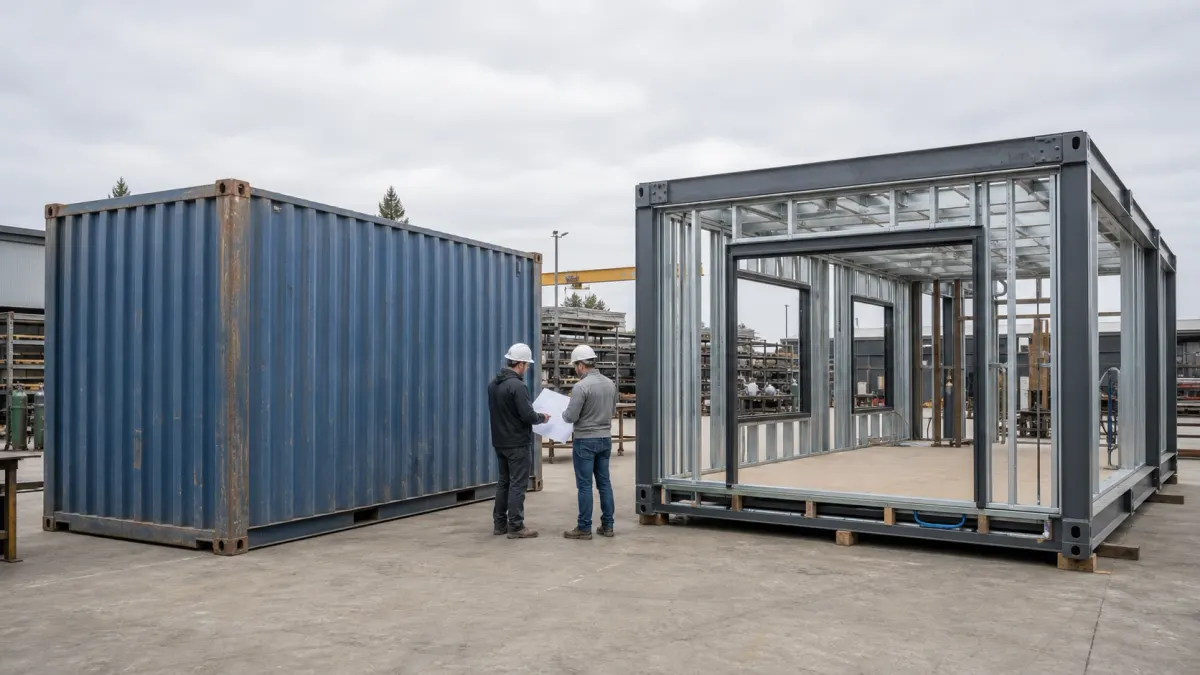
The mistake is treating “shipping container” and “purpose-built module” as two products that can be compared by shell price alone. They begin with different design intentions. A freight container is optimized to carry goods, resist transport conditions, and transfer stacking loads through its structural system. A purpose-built building module is designed around occupancy, openings, insulation, services, and a defined building use from the beginning.
The comparison becomes useful only after the project asks what must happen between the raw structure and an occupied building.
Five questions before any price comparison
Before choosing either approach, ask:
- Was the structure designed for freight service or for the intended building use?
- How do doors, windows, and combined rooms affect the load path?
- Where will insulation, vapor control, and service cavities fit?
- What foundation, anchorage, corrosion, and site evidence is required?
- Which authority and code path will review the completed building?
These questions do not make one system universally better. They reveal whether a quotation describes a shell, a finished unit, or a complete site-ready project.
A freight container carries loads in a particular way
The visual strength of a container can be misleading. It is strong for the tasks it was designed to perform. That does not mean every part of every wall can be removed without a structural consequence.
Large doors, panoramic windows, or the removal of adjacent sidewalls can interrupt the original system. New frames, posts, beams, connections, and foundations may be needed to carry loads around the opening. Stacking arrangements can add another layer of analysis.
New York's 2025 Building Code provides one useful example of how a jurisdiction can treat intermodal shipping containers used as buildings. Its provisions address foundations, anchorage, structural analysis, and reinforcement around openings. The code became effective on December 31, 2025. It is not a universal rule for every location, but it demonstrates why “the box is already strong” is not a complete structural argument.
Purpose-built does not mean assumption-free
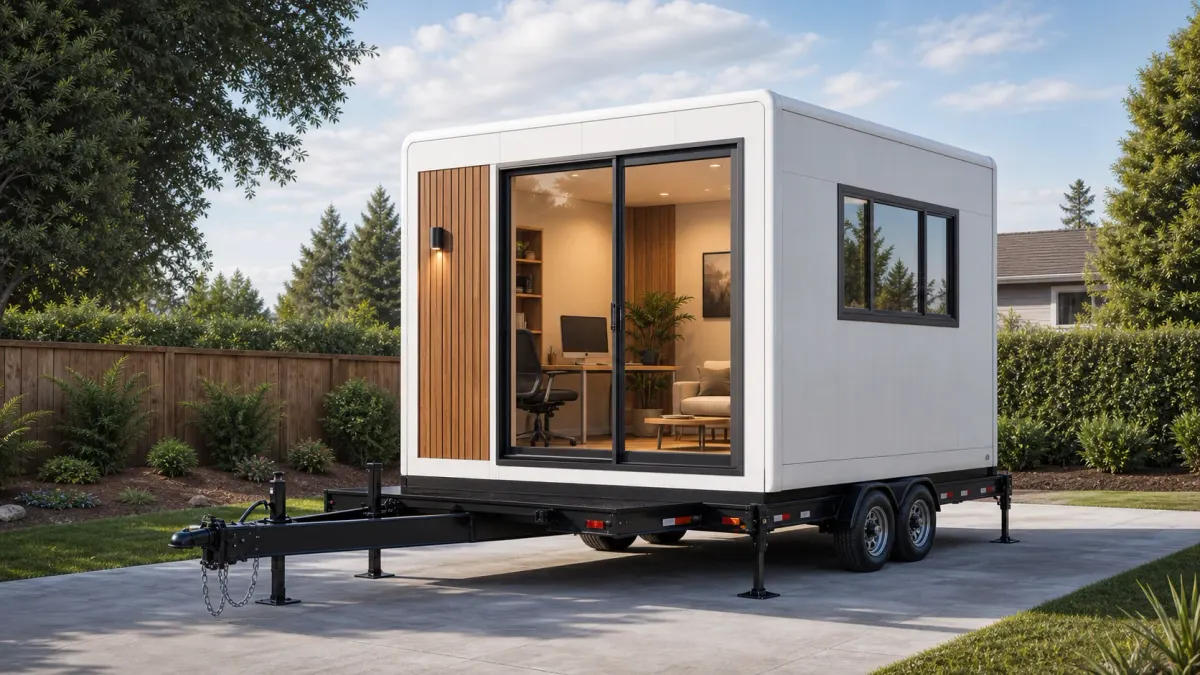
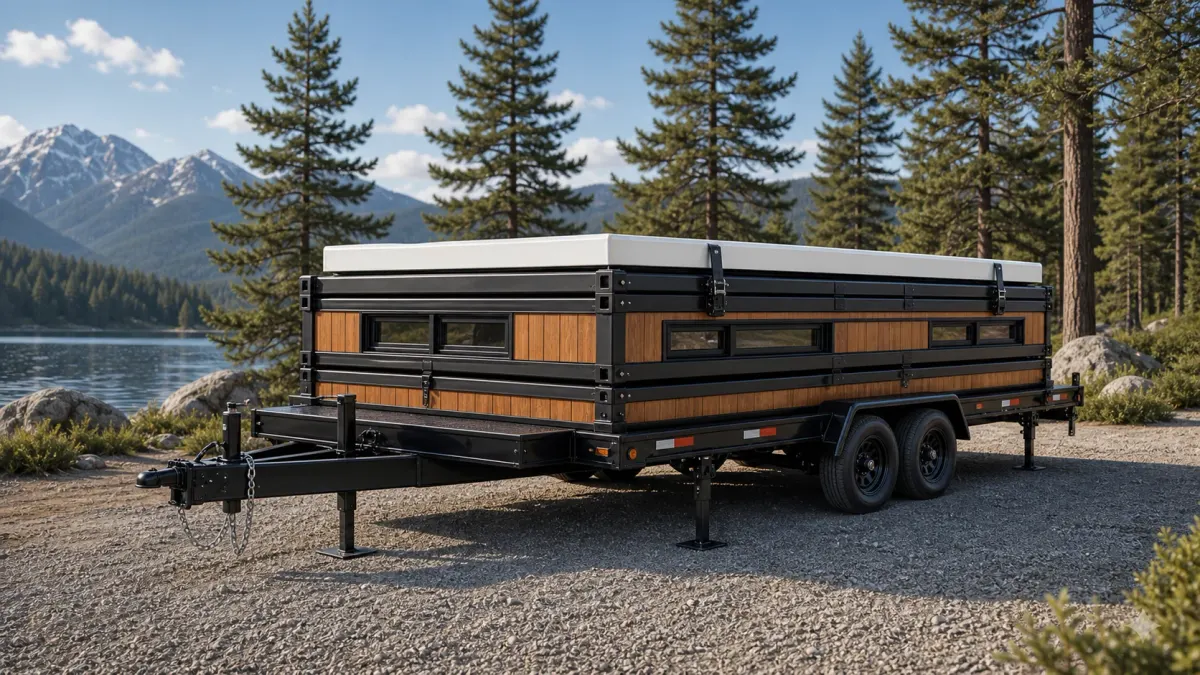
A purpose-built module begins with building use in mind, but it still needs an identified design basis, materials, connections, transport condition, foundation, site completion, and local approval route. The term “modular” is not itself a certification or a guarantee of compliance.
Its main conceptual advantage is that openings, room dimensions, insulation zones, service routes, and connection details can be incorporated into the original design rather than cut into a freight structure later. Whether that advantage produces a better project depends on the quality of the design, production, documentation, installation, and site coordination.
The right comparison is therefore not recycled versus new, or container versus module in the abstract. It is one complete, documented system versus another.
Insulation and usable space form one decision
Steel conducts heat readily. A container conversion needs a deliberate strategy for thermal bridging, condensation, air control, vapor behavior, fire performance, and interior finish. The correct assembly depends on climate and use.
Insulation placed inside can reduce the already limited internal width. External insulation can preserve interior space but changes the exterior appearance and detailing. Service cavities, wall linings, windows, corners, roof edges, and floor junctions need continuity. A small gap or exposed steel path can have an outsized effect.
Purpose-built modules face the same building-physics principles, but their wall and roof depths can be selected around the intended assembly. Again, this is a design opportunity, not proof of performance. The final details and local requirements matter.
Prior condition and corrosion need evidence
Used containers may have a service history, repairs, coatings, dents, corrosion, or exposure that is not visible in a listing photograph. “One-trip” and used units can present different conditions, but a label is not a condition report.
The project should identify the container, document its condition, determine whether prior coatings or cargo history require attention, and specify preparation and corrosion protection. A purpose-built steel module also needs an appropriate coating and maintenance strategy.
The useful distinction is traceability: what material and condition evidence is available, and how does it connect to the intended building life?
Completed scope matters more than shell price
A low shell price can be real and still be a poor measure of the completed project. The budget may also include design, engineering, cutting and reinforcement, windows and doors, insulation, internal finishes, MEP services, foundation, transport, lifting, site work, connections, permits, inspections, and professional fees.
A purpose-built module quotation can be equally misleading if it excludes transport, foundation, unloading, utility connections, local design work, or final commissioning.
The comparison should place both options into the same responsibility table. If one price stops at the factory gate and the other includes delivery and fit-out, the numbers do not answer the same question.
Where each approach can make sense
A container conversion may be appropriate when the container format is part of the design intent, openings remain compatible with the structural concept, condition is documented, and the site and approval path support it. It may also suit certain compact, ancillary, or industrial uses where the dimensions and aesthetic are accepted rather than fought.
A purpose-built module may be more direct when occupancy, room width, insulation depth, large openings, repeatability, and integrated services are central to the brief. It avoids starting with a freight envelope that must be transformed into a different type of object.
Neither answer should be chosen from an image board. Start with use, climate, site, approval path, and completed scope. The building logic should lead the price comparison, not follow it.
Sources
New York Department of State 2025 Uniform Code notice, New York Building Code Chapter 31.