Recovery is not complete when a factory finishes a home
After a wildfire, speed matters in a deeply human way. Families are not waiting for an abstract construction metric. They are waiting for a stable home, a familiar neighborhood, working utilities, safe access, insurance and finance decisions, approvals, and the ability to move forward without another avoidable surprise.
On February 6, 2026, California Governor Gavin Newsom announced additional funding intended to expand access to factory-built housing for Los Angeles fire survivors. The announcement presented modular and other prefabricated options as part of a faster rebuilding pathway and emphasized the importance of maintaining the character of affected communities.
Factory production can be an important part of recovery. The announcement should not be reduced to “prefab is fast.” A complete recovery schedule includes decisions and work that no factory can perform on behalf of an unknown property or neighborhood.
What the announcement means
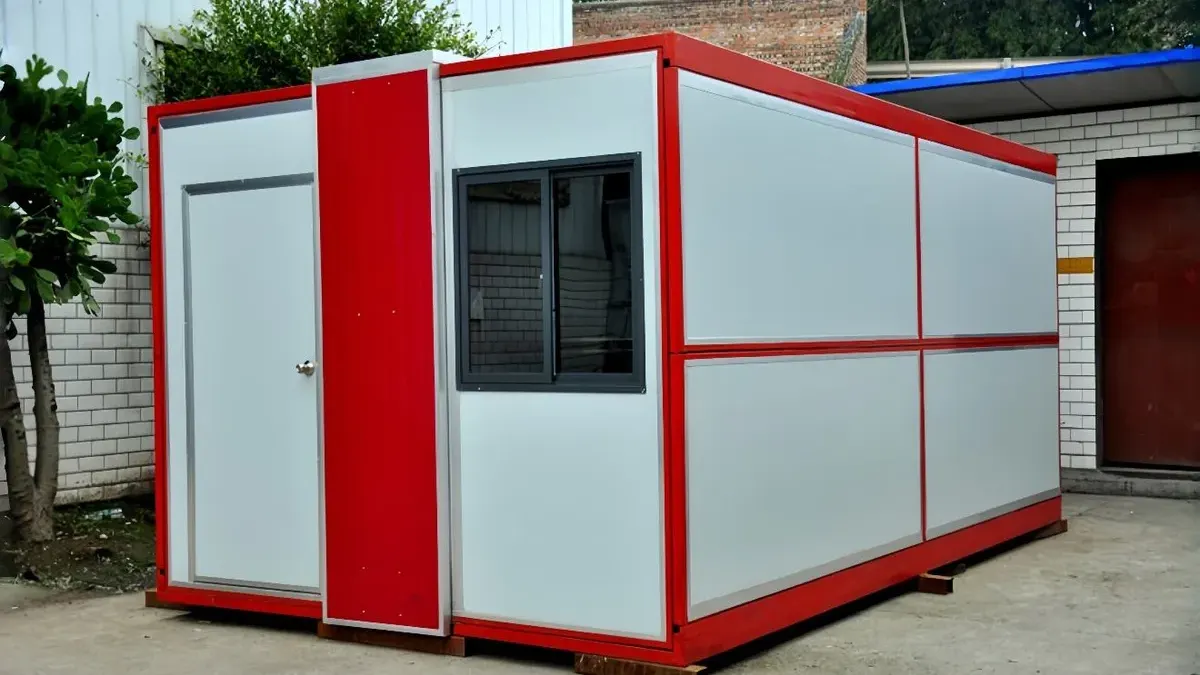
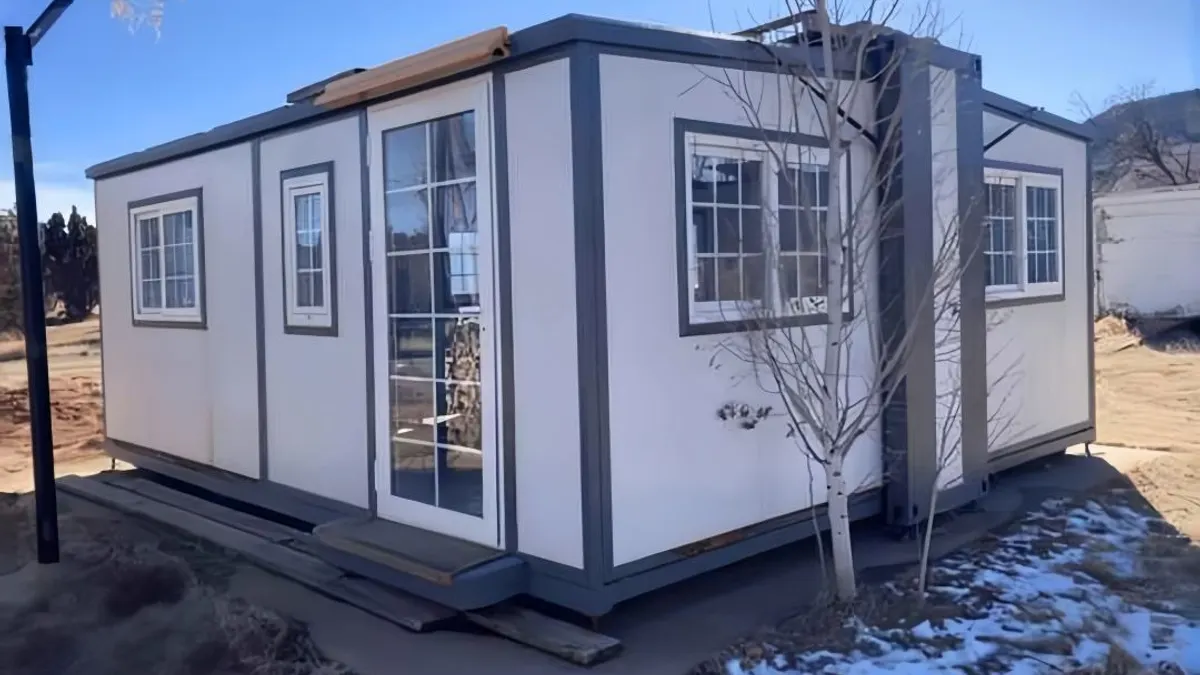
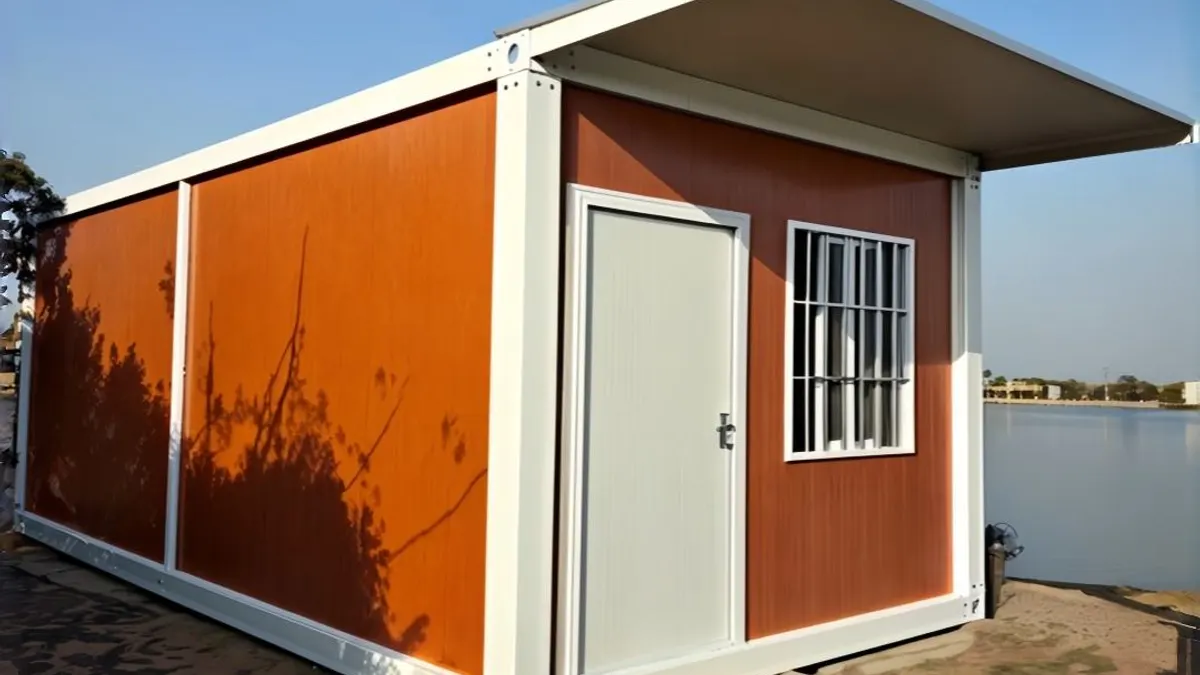
California's announcement confirms that factory-built housing is being treated as one tool within the LA recovery effort, including funding pathways and resources connecting survivors with pre-built options. It does not mean every survivor, property, provider, or design has the same pathway. It also does not turn a supplier's speed, cost, resilience, or fire- performance statement into a general fact about all prefabricated housing.
The practical lesson is narrower and more useful: off-site production can compress part of the building process when it is connected to property, community, approval, delivery, and installation work.
Factory time and recovery time are different clocks
A factory schedule may begin after design decisions are sufficiently complete. A recovery schedule begins much earlier and ends much later.
Before production, a household may need to resolve ownership, insurance, finance, debris and site conditions, design selection, neighborhood requirements, utility information, and local submissions. While the home is being built, the property may need foundation, drainage, service, access, and inspection work. After delivery, installation, connections, testing, final inspections, and occupancy steps remain.
Factory time is therefore one component of recovery time. This is not an argument against prefabrication. It is the reason the approach needs an integrated schedule rather than an isolated promise.
Temporary shelter and permanent rebuilding are different decisions
Post-disaster housing discussions often mix temporary units, interim accommodation, and permanent homes. They answer different needs and can follow different rules.
Temporary housing may prioritize rapid deployment, basic services, relocation, and a defined period of use. Permanent rebuilding must address long-term site, neighborhood, building, energy, durability, maintenance, finance, insurance, and occupancy requirements. A unit appropriate for one purpose should not be described as automatically suitable for the other.
Clear language matters because survivors may be comparing options while under significant time and financial pressure. Every provider and project team should state whether an option is temporary, relocatable, permanent, preapproved for a defined context, or still subject to site-specific review.
Neighborhood character is a project input
The California announcement repeatedly connects recovery with neighborhood character. That should not be dismissed as an aesthetic preference.
Neighborhood fit can include building scale, roof form, frontage, setbacks, entrances, materials, landscape, privacy, and the relationship between new and surviving structures. It can also affect community acceptance and the emotional continuity of a place after loss.
Factory-built housing is sometimes presented as a choice between standardization and local identity. A better approach separates what should repeat from what should respond. Structural systems, manufacturing processes, and selected components may repeat, while exterior form, site placement, access, and neighborhood-facing details respond to context.
Site readiness still governs delivery
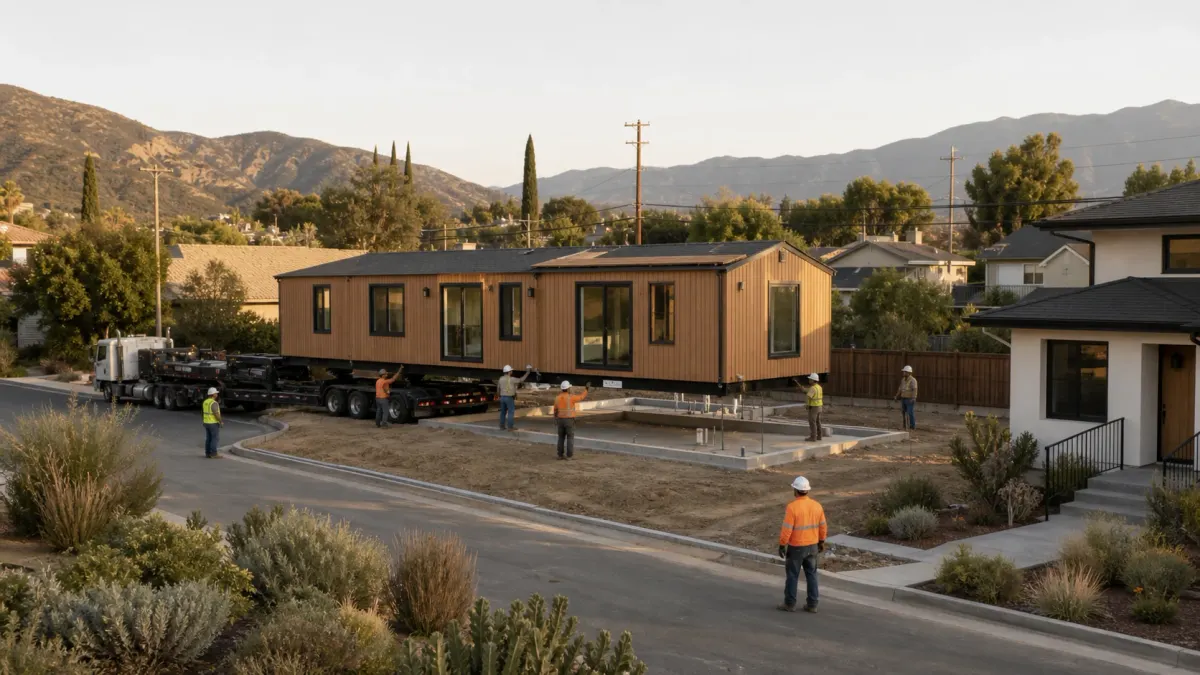
The property needs to be ready for the building, not only available on a map. Recovery projects may face debris clearance, changed soil or drainage conditions, damaged utilities, constrained streets, temporary construction activity, overhead obstructions, and limited space for unloading or lifting.
The site team should confirm foundation inputs, survey information, access, fire review, water, wastewater, power, communications, drainage, transport route, lifting position, and the sequence of inspections. A factory-built home that arrives before the site is ready can create storage, protection, rescheduling, and cost problems.
This is why recovery coordination should connect the home provider to the local designer, engineer, site contractor, utility parties, transporter, installer, and authority.
Fire-related claims need evidence, not category language
Factory construction does not make a building fire-resistant by definition. Performance depends on materials, assemblies, details, openings, roof and exterior conditions, site design, water and fire requirements, testing, approvals, installation quality, and ongoing maintenance.
The state announcement includes descriptions and attributed statements about individual projects. Those examples should remain attributed to their named sources. They should not be converted into blanket claims that all steel, modular, or factory-built homes provide the same protection or construction time.
Survivors and project teams deserve specific evidence: what assembly is proposed, which standard or test applies, what the local authority requires, who verifies installation, and which site measures remain necessary.
A respectful recovery article should point back to official resources
Information changes during recovery. Funding rounds open and close. Approved resources, local processes, rebuilding tools, and contact points can be updated. Readers should verify current information through California, LA-area rebuilding programs, and their local city or county before making a commitment.
The strongest role for factory-built housing is not to promise that recovery is simple. It is to make one complex part more controlled while remaining honest about every interface that still has to work.