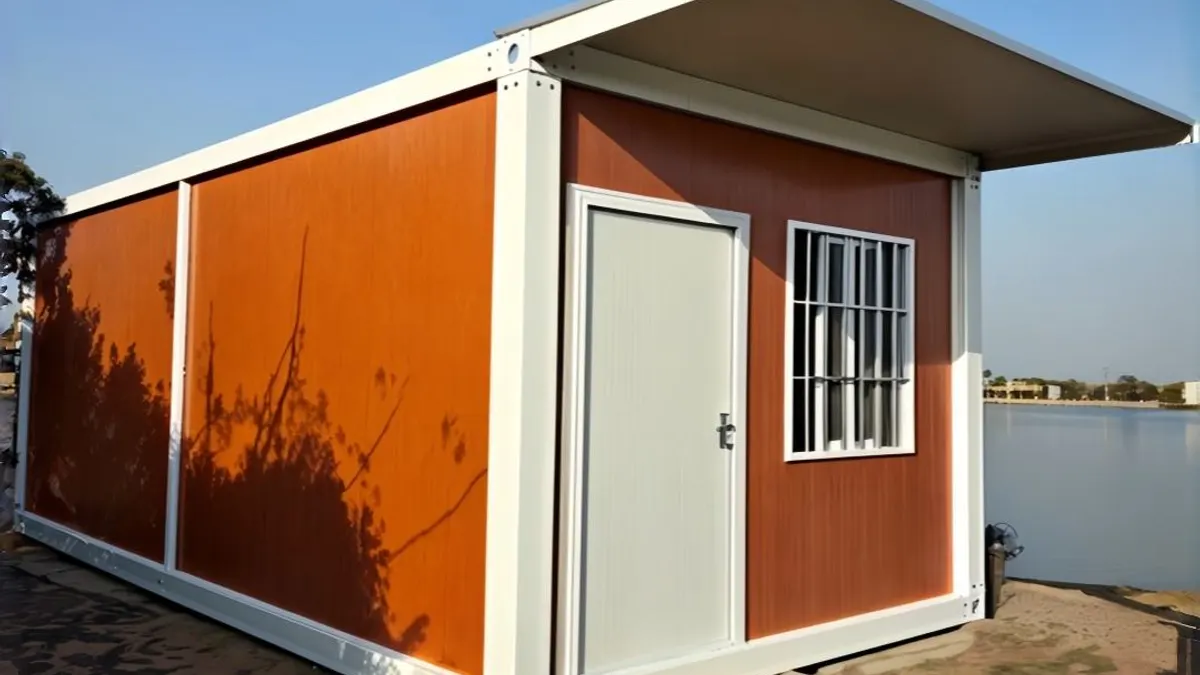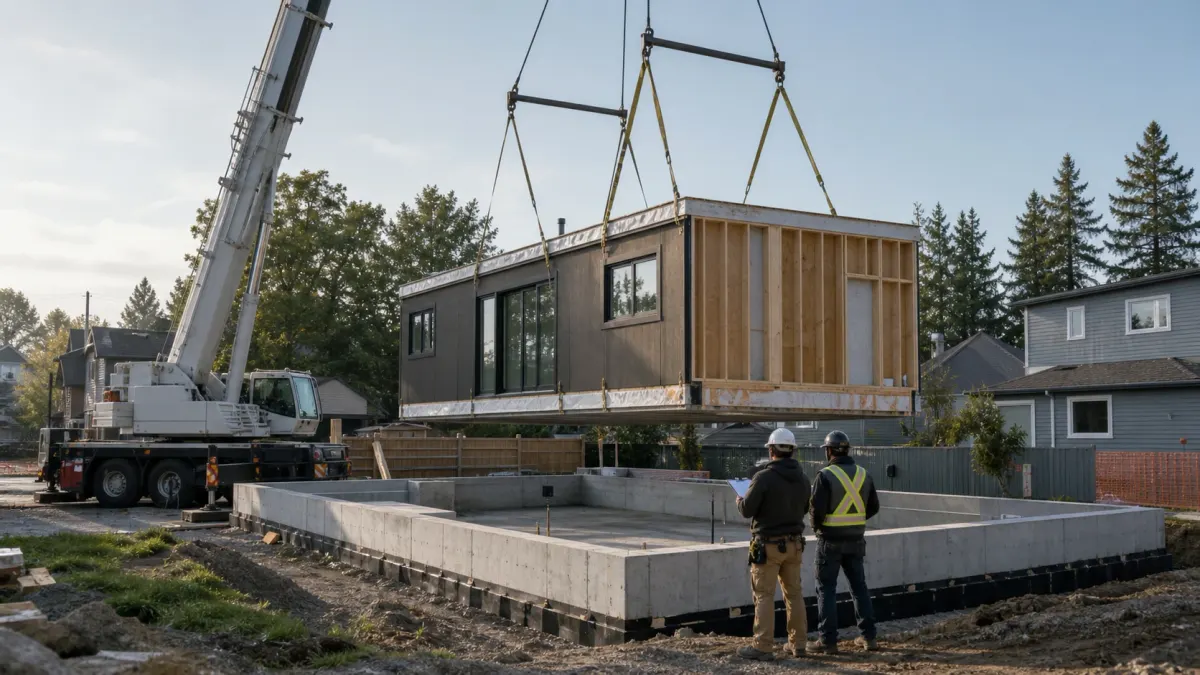
A factory invoice and a conventional construction draw do not follow the same clock
Factory-built housing has always created a financing question that is easy to describe and harder to solve: the building may be taking shape away from the property where the lender's security sits. A factory may need commitments before production begins. The property may need to be acquired or prepared before the home arrives. Delivery and installation happen later, and the final site still needs foundations, services, inspections, and handover.
On May 7, 2026, Canada Mortgage and Housing Corporation announced an expansion of its mortgage loan insurance offering for prefabricated and modular construction. For eligible homebuyers, the new CMHC Prefab Plus offering allows a minimum down payment of 5% and funds to be received in up to four stages as construction milestones are met. CMHC also expanded access to mortgage loan insurance for modular construction across its multi-unit products.
The practical importance of the announcement is the sequence. It recognizes that a factory-built project does not necessarily move from vacant land to completed home through the same payment pattern as a conventional site-built project.
What changed, in brief
CMHC Prefab Plus gives eligible buyers a way to connect insured financing with several milestones rather than waiting for one final lump-sum release. CMHC gives the example of a draw for acquiring and preparing the property, followed by another after the home is delivered and ready for installation. The program does not mean that every home described as prefab qualifies, nor does it remove lender, property, builder, documentation, or local approval requirements.
That distinction matters. A financing product can support a construction sequence, but it does not turn a product label into an approval.
Why factory production changes the financing conversation
In a conventional build, a lender may inspect visible progress on the property: foundation, framing, enclosure, services, and completion. In an off-site project, a significant part of the value may be created inside a factory before it appears on the property. The lender, buyer, builder, and installer therefore need a shared view of what each milestone means and what evidence shows that it has been reached.
This is not only a banking issue. It affects the purchase contract, production slot, factory deposit, land schedule, transport booking, installation team, and the timing of local inspections. A project can have a finance approval and still face a sequencing gap if the factory expects payment before the lender recognizes the relevant milestone.
The useful early question is not simply, “Can this home be financed?” It is, “Which event releases each payment, what evidence is required, and who carries the cost until then?”
A four-stage framework should be mapped, not assumed
CMHC describes access to up to four draws, but a buyer should not invent the draw schedule from a press release. The actual sequence needs to be confirmed with the lender and the parties delivering the project.
A planning conversation may include:
- property acquisition and site preparation;
- design completion and the start of factory production;
- verified factory progress or completion;
- delivery, installation, inspections, and mortgage completion.
This list is an illustration, not a CMHC-prescribed document schedule. The lender may use different milestones, require specific inspections, or treat deposits and off-site work in a particular way. The builder may also have production terms that do not match the lender's default process. Those differences should be visible before a non-refundable commitment is made.
A factory-built home does not remove site work
The phrase “factory-built” describes where much of the home is produced. It does not mean the property is ready to receive it.
The buyer may still need to coordinate surveys, planning review, foundation design, excavation, drainage, water, wastewater, power, access, delivery clearances, crane or lifting arrangements, final connections, local inspections, and occupancy steps. Some of these costs may sit outside the home supply contract. Some may need to be completed before a delivery milestone can be recognized.
This is why a draw schedule and a responsibility schedule should be read together. A line that says “home delivered” is incomplete if nobody has confirmed the access route, unloading method, prepared foundation, or utility interface.
Documents should follow the milestones
Each stage should have evidence that all parties understand. Depending on the project, that may include the purchase agreement, property documents, drawings, specifications, permits or local submissions, factory progress evidence, inspection records, insurance documents, delivery records, installation sign-off, and final occupancy documentation.
The purpose of the document list is not paperwork for its own sake. It is to prevent four different parties from using four different definitions of “complete.” A factory may mean the modules are ready to dispatch. A transporter may mean they have reached the property. An installer may mean they are set and connected. A lender or local authority may require a later inspection milestone.
Clear definitions make the financing sequence easier to manage and reduce the chance that the home, land, and money schedules drift apart.
Questions to confirm before an order
Buyers considering Prefab Plus should ask the lender which homes and project structures are eligible, how deposits are treated, how off-site progress is verified, and which documents release each draw. The builder should explain the deposit schedule, change-control process, factory milestones, storage terms, delivery conditions, and what happens if the site is not ready on time.
The local project team should identify the foundation, utility, permit, access, installation, and inspection responsibilities. The buyer should then compare all three schedules: financing, factory production, and site delivery.
CMHC Prefab Plus is important because it addresses a real mismatch in factory-built housing. Its value will still depend on disciplined project coordination. Financing can support the sequence, but the sequence has to be written down.
Sources
CMHC expands mortgage insurance to support prefab and modular construction, May 7, 2026