A development announcement is a planning signal, not a purchase order
On September 7, 2026, Saudi Arabia's Public Investment Fund (PIF) announced the Gulf Coast Development Company, a new vehicle to develop an integrated residential and tourism destination along the Al-Khafji coastline of the Arabian Gulf. The announcement describes a development area of approximately 20 square kilometres and a 10-kilometre waterfront. At completion, PIF envisages eight residential neighbourhoods, more than 16,000 housing units, approximately 1,400 hotel keys and associated commercial, educational, tourism and marina facilities. PIF describes a three-phase development, with the first phase—comprising three neighbourhoods—targeted for completion in 2030. This remains a stated programme target, not a confirmed completion outcome.
These are announced plans, not a verified tally of approved modular-building packages. Nothing in the PIF announcement establishes that a particular modular supplier has been selected, that prefabricated structures will be used, or that every facility will be delivered simultaneously. The distinction is central to responsible market intelligence.
Depending on the approved work packages and delivery sequence, a diversified waterfront development may require different kinds of space at different times. Some need permanent civic and hospitality buildings; others need temporary workplaces, construction-stage welfare, movable coordination facilities or phased service rooms. A useful industry analysis starts by separating those needs rather than projecting a container-house sale onto every construction announcement.
Why the phased programme matters more than the final room count
The long-range total—roughly 1,400 hotel keys and more than 16,000 planned homes—provides the scale of the vision. But procurement teams cannot size site offices, staff facilities or temporary service units from that final number alone.
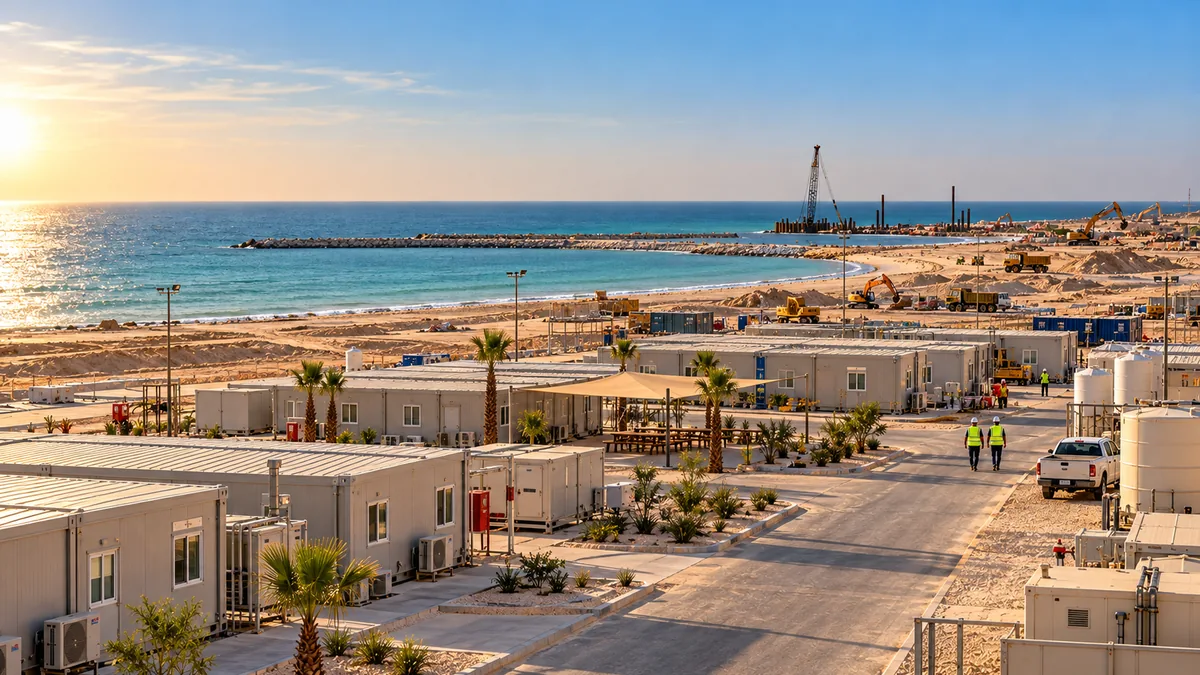
A three-phase programme creates different operating conditions. Early works may concentrate on surveys, access, earthworks, utilities and logistics. Active neighbourhood and hotel construction may require multiple contractor compounds, staff welfare points and equipment-support spaces. Later delivery may shift the focus to commissioning, maintenance access, permanent operations and guest experience.
The sequence and location of these work packages have not been supplied in PIF's public announcement. Before specifying a modular building, a buyer would need a work-package programme identifying who needs the room, for how long, at which plot and under which site conditions. The best answer may be an existing local building or a rented facility—not a new imported module.
Distinguish the destination's three space markets
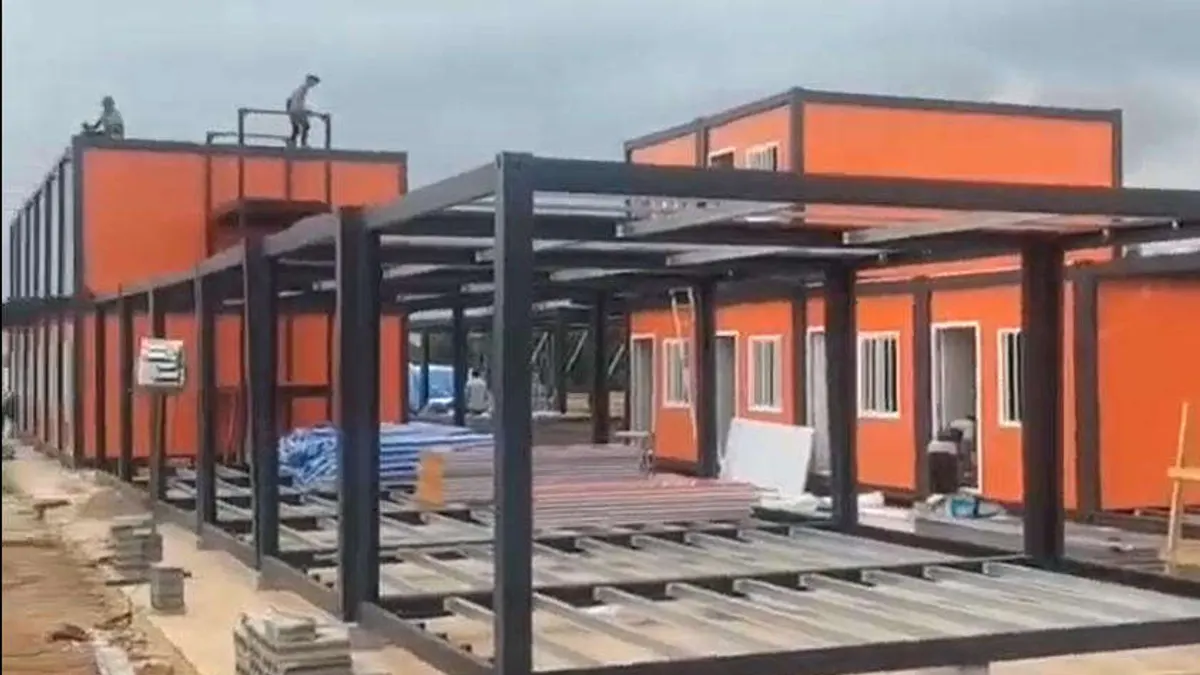
Construction support covers site offices, briefings, supervision, security checkpoints, rest areas, sanitation and some protected storage. These spaces need safe vehicle access and reliable daily operation near the work zones.
Hospitality support covers housekeeping, linen, maintenance workshops, staff changing, back-of-house offices, service storage and possibly appropriately approved staff accommodation. These rooms are judged by operational efficiency, privacy and the effect on guests—not just by purchase price.
Residential and community space covers long-lived dwellings, education, commercial services and public facilities. It brings different ownership, lifetime, legal, architectural and utility requirements. A temporary cabin specification should never be assumed to meet the requirements for a permanent residential or public building.
The three markets can coexist at one destination, but they require separate design briefs, procurement documents, approval pathways and responsible parties.
Test modular fit against actual tasks
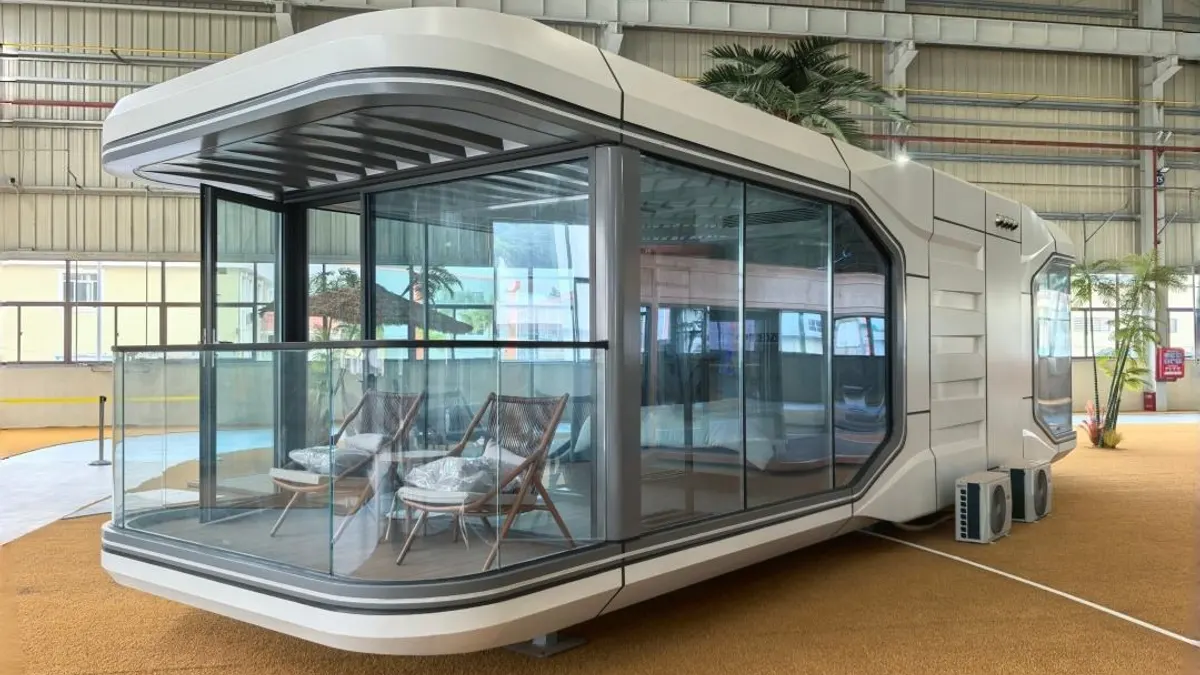
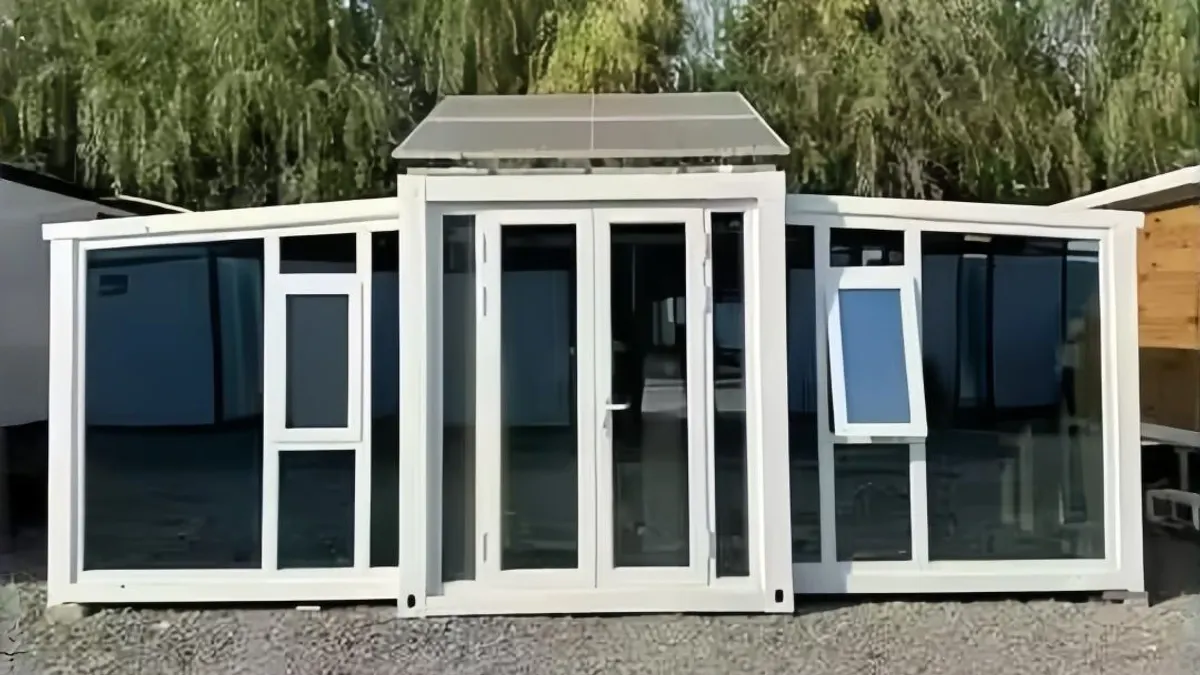
Modular or prefabricated systems can be worth evaluating when a project needs repeatable units, well-defined connections, factory-controlled fabrication or buildings that can be relocated between phases. Suitability is not automatic.
A temporary office block may be a plausible module candidate where the land is ready, access dimensions are confirmed and site services can be installed in time. A highly tailored waterfront hotel with complex circulation, brand standards and life-safety systems may require a very different construction strategy. Even a small restroom or security unit can become inappropriate if the local authority, utility connections or servicing route is unresolved.
The question is therefore: which work package can be described accurately enough to manufacture off-site, transport and install responsibly? A modular unit is a delivery method, not a substitute for master planning.
Coastal conditions change the specification conversation
Al-Khafji sits on the Arabian Gulf rather than within the inland desert environments addressed by many Saudi construction guides. Coastal exposure introduces questions about saline air, humidity, wind-driven moisture, drainage, thermal performance and the maintenance of exposed metalwork and equipment. The actual exposure class and design values must come from site-specific studies and qualified local professionals.
Buyers should seek evidence for corrosion protection, roofing and joint details, exterior fixtures, HVAC servicing, electrical enclosure selection and maintenance access. It is also important to understand whether factory finishing will be protected during road movement, lifting and site storage.
None of those requirements should be reduced to a generic claim that a module is “weatherproof” or “Saudi-approved.” A documented project environment and applicable local code determine the necessary design, testing and inspection.
Start with access, freight and lifting before choosing a catalogue model
A coastal development serving residential, hospitality and marina uses may place sensitive guest routes near busy delivery routes. Where construction traffic moves, when heavy lifting is permitted, whether access roads accommodate oversize loads and how modules are protected during staging are practical early questions.
A buyer's logistics brief should state the origin and destination of each shipment, packed dimensions and weights, route constraints, unloading equipment, laydown area, weather restrictions, lifting responsibility and the point at which risk transfers. Arrival at a port is not evidence that a module has been delivered to site, installed, inspected or accepted.
Procurement comparisons should distinguish factory price from transport, duties, local works, foundation, utilities, installation and permit costs. If these scopes are missing, a low initial quote is not necessarily a lower project cost.
Design staff and service movements with the guest experience
A tourism destination depends on spaces guests rarely see. Housekeeping needs storage and linen circulation. Maintenance requires spare parts, safe access and sometimes noisy work zones. Security and service personnel need appropriate welfare facilities. Service movement must not degrade residential privacy or pedestrian safety.
Compact modular support rooms can be considered as part of a back-of-house network, but placement must follow a service-route diagram. A movable cabin in the wrong location can be more disruptive than a well-positioned permanent service building. In a phased destination, relocation dates and second-use possibilities should be designed before the first installation.
Staff accommodation deserves a separate decision. Existing housing, transport links, local hotels or off-site accommodation may be preferable. A new worker camp cannot be justified merely from a forecast hotel-room total.
Define which promises the supplier can actually make
A responsible manufacturer or OEM coordinator may describe product sizes, layout options, structural system, materials, factory-side tests, packing, production coordination, documentation and shipping handover within an agreed scope.
That does not amount to local engineering approval, construction permitting, utility capacity, on-site installation authority or a guarantee that a finished building satisfies every Saudi project requirement. Local designers, contractors, authorities and utility providers must confirm those matters for the specific location and intended use.
A project-specific modular-space brief should identify the project owner, consultant, local engineer, contractor, logistics provider and manufacturer, and document the division between factory deliverables and destination works. The named parties, their contractual authority and their actual responsibilities must be verified rather than assumed. Unknown responsibilities are not minor paperwork; they can decide whether a package is viable.
Make the phase-end decision before placing an order
A relocatable site office may be needed for only a portion of the construction period, but its life-cycle cost extends beyond the first delivery. If a module is expected to move from an early work zone to a later hotel or residential package, the project should document who owns it between phases, whether it can be refurbished, how it will be disconnected safely and who pays for a second lift and transport. If its second destination is unknown, reuse is a possibility rather than a savings claim.
The alternative may be to rent locally, consolidate functions in a shared compound or construct a permanent service room earlier in the programme. The comparison should include occupancy, duration, downtime between phases, local maintenance, residual value assumptions and disposal responsibility. This keeps the analysis about procurement choices instead of treating mobility as an unconditional benefit.
A project-stage decision record is more useful than an assumed product list
For each candidate support-space package, project teams could record five alternatives: use an existing facility, rent a unit locally, procure a new relocatable module, construct a permanent room or combine several functions in a shared space. The record should show why options were screened out, not only which option was preferred. This matters when a modular supplier is brought into a discussion before the location, intended occupancy or service capacity is fully determined.
The same sheet can separate decision readiness from commercial interest. “Potentially useful” means the space requirement is plausible; “ready for technical quotation” requires a verified use, configuration, location, utilities, expected duration and scope owner; “ready for procurement” requires the appropriate approvals, coordinated documents, programme and contracts. Those stages are not interchangeable. A polished product rendering cannot move an unverified project from the first stage to the third.
In a coastal destination, this discipline is particularly important for site access and servicing. A unit that fits the desired internal floor area may still obstruct emergency access, create service traffic near guests or occupy land needed for permanent infrastructure. The siting check must precede the final module geometry. Where the evidence is insufficient, the professional outcome is to keep the requirement open rather than state that a modular solution has already been selected.
The intake questions worth asking before any quotation
Before issuing an RFQ, the project team should be able to answer:
- Is the proposed unit temporary, relocatable or permanent, and what is its permitted use?
- Which phase, plot, workforce or operation creates the need?
- What occupancy, accessibility, fire protection and local approval obligations apply?
- What are the site climate, wind, corrosion, geotechnical and flood/drainage design inputs?
- Who supplies foundations, lifting, water, wastewater, power, communications and commissioning?
- What are the delivery route, crane, access and construction-hour restrictions?
- What evidence and factory inspections must be available before shipment?
- Who maintains the unit, and what happens to it when a phase ends?
These answers support a comparison across modular and conventional options. They may also reveal that no modular procurement is justified for a particular package.
Read the Al-Khafji announcement as an opportunity to ask better questions
PIF's announcement provides a credible, dated signal that Al-Khafji is being planned as a sizable new coastal residential and tourism destination. It does not supply a tender list, local design approvals, hotel procurement breakdown or a modular construction mandate.
For global modular-building suppliers, the practical response is to study the project's future space needs, understand where phased or repeatable units might create value and be prepared to collaborate with qualified local parties if a real scope emerges. This builds market literacy without claiming participation in work that has not been awarded.